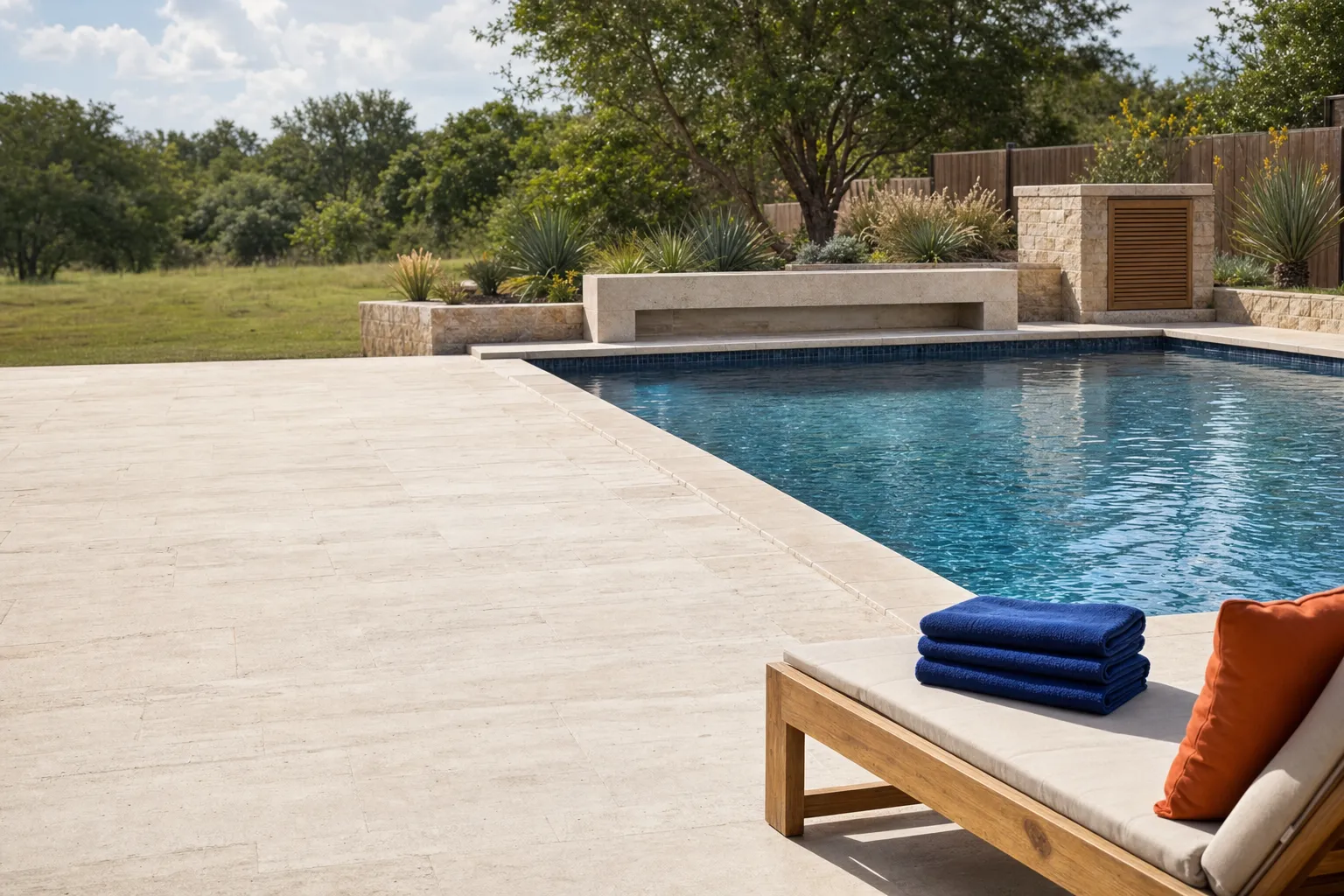
Pool plastering and pool resurfacing both restore the pool interior and rely on the same fundamentals: proper surface preparation, the right finish material, careful application, and correct curing. When those steps are done well, plaster durability improves and the finished surface will look better and last longer.
How plastering and resurfacing overlap
At a high level, both jobs address the pool surface. Whether the work is called pool plastering or pool resurfacing, the project aims to replace or cover an existing finish so the pool is watertight and attractive.
- Assessment and diagnosis. We inspect substrate cracks, delamination, and existing finish wear before recommending work.
- Surface preparation. Bonding depends on removing loose material and profiling the substrate.
- Material selection. The choice between a white plaster, quartz blend, or aggregate finish affects texture and longevity.
- Application and curing. How the material is mixed, placed, and cured controls final strength and porosity.
- Water chemistry and start up. Early water balance influences early durability and staining risk.
We handle plastering projects and larger resurfacing work across the Dallas Fort Worth area, including Coppell and Lewisville, with an emphasis on craftsmanship and attention to detail.
What each process focuses on
Pool plastering
Pool plastering refers to applying a cement based finish that becomes the pool interior. Plaster is usually a mixture of white cement and marble dust or other aggregate. Plaster gives a smooth, light colored surface that is common in traditional pools. Plaster durability depends on finish thickness, aggregate type, mix quality, and curing. For a technical overview of durability factors, see our related topic on Plaster Durability.
Pool resurfacing
Pool resurfacing is a broader term that covers replacing or covering the pool interior with one of several finishes. Resurfacing options include standard plaster, quartz plaster, pebble aggregate finishes, and specialized concrete overlays. Resurfacing projects can also include tile replacement, coping work, and other cosmetic updates when we remodel a pool.
Key factors that determine plaster durability
What we check to predict how long a finish will last
- Substrate condition, including hairline and structural cracks
- Extent of previous delamination or peeling
- Finish type and aggregate hardness
- Preparation method, such as acid wash, hydrodemolition, or mechanical profiling
- Mixing and placement consistency
- Curing method and duration before filling
- Local water chemistry and ongoing maintenance
- Exposure to sunlight and freeze thaw cycles for exposed installations
Pro tip: In the Dallas Fort Worth area, long hot summers increase the importance of thorough curing and correct water balance during the first weeks after we refill the pool.
High level process we follow on every plaster or resurfacing job
- Assessment. We document the existing finish, measure crack patterns, and test bonding where needed to recommend plastering or a different resurfacing system.
- Preparation. Loose plaster and contaminants are removed, damaged areas are patched, and the substrate is profiled to accept the new finish.
- Material and finish selection. We review pros and cons of white plaster, quartz blends, and pebble aggregate finishes for durability and appearance.
- Application. Experienced crews apply the chosen finish under controlled conditions and according to manufacturer guidance.
- Curing and controlled start up. Curing time and how the pool is filled impact early strength and staining resistance.
- Final inspection. We inspect adhesion, surface texture, and water clarity during start up to confirm the finish meets expectations.
Common ways plaster and finishes show wear
Understanding wear patterns helps decide whether repair, local patching, or a full resurfacing is needed.
- Etching and dulling from poor water balance and low calcium hardness
- Staining from metals or organic tannins
- Scaling and flaking where the plaster lost bond to the substrate
- Discoloration from algae or surface contamination
- Exposed aggregate in pebble finishes from surface erosion
Watch out: Visible flaking, large patches of stain that do not scrub out, or floating fragments often indicate compromised bonding and a need for professional resurfacing rather than patchwork.
Maintenance steps that extend finish life
Routine care does not replace the initial quality of work, but it preserves it. We recommend these items as part of ongoing pool care.
- Keep water chemistry stable rather than letting levels swing widely
- Address metal staining early with manufacturer approved treatments
- Limit use of overly acidic cleaning agents on cement based finishes
- Inspect coping, tile and skimmer areas where leaks can undermine the finish
- Plan a professional inspection if the pool is more than 10 years old or if wear appears uneven
Choosing between a plaster refresh and a full resurfacing
The decision rests on the extent of damage, desired look, and long term goals. A plaster refresh may be appropriate for uniform cosmetic wear. Full resurfacing is the right call when bond failure, broad staining, or a finish upgrade is desired.
When we work on a project in Coppell or elsewhere in the Dallas Fort Worth area, we review options and show sample finishes so you can see how color and texture will read in your backyard light.
Key takeaway
Pool plastering and pool resurfacing share the same fundamentals that control longevity: accurate diagnosis, careful surface preparation, material choice suited to conditions, correct application, and proper curing. Attention to each step is what determines plaster durability in Coppell and the surrounding area.
Frequently asked questions
How long should a properly installed plaster finish last in the Dallas Fort Worth area?
A well installed cement based plaster finish typically lasts several years depending on finish type, local water chemistry, and maintenance. Aggregates like quartz or pebble finishes often offer longer life than standard white plaster under similar conditions.
Can we resurface only part of the pool or is full resurfacing usually required?
Small localized repairs can work for limited damage, but bonding and finish continuity are critical. We evaluate whether partial repairs will blend visually and bond mechanically or whether full resurfacing is the more durable choice.
What happens if plaster is filled too soon after installation?
If a finish is filled before it has cured according to manufacturer guidance, it can lose strength, become more porous, and be more prone to staining. We follow recommended curing and start up practices to protect finish life.
Do different plaster colors affect durability?
Color does not directly change material strength, but darker colors absorb more heat which can encourage evaporation and chemical concentration. Texture and aggregate selection are more significant for wear resistance.
How do we decide between plastering and switching to a pebble or quartz finish?
The choice depends on desired appearance, slip resistance, lifetime, and budget. Pebble and quartz blends are more resistant to etching and can outlast standard plaster, but they produce a different look and texture. We review samples and long term expectations before recommending one option.
How soon can the pool be used after resurfacing?
Time to use varies by material and cure method. Some finishes require a light cure period followed by a controlled fill. We follow manufacturer instructions and check water balance before recommending regular use.
Learn more and read reviews
Read customer reviews and get directions by finding Petri Pools on Google, and learn more about finishes and planning on our site.