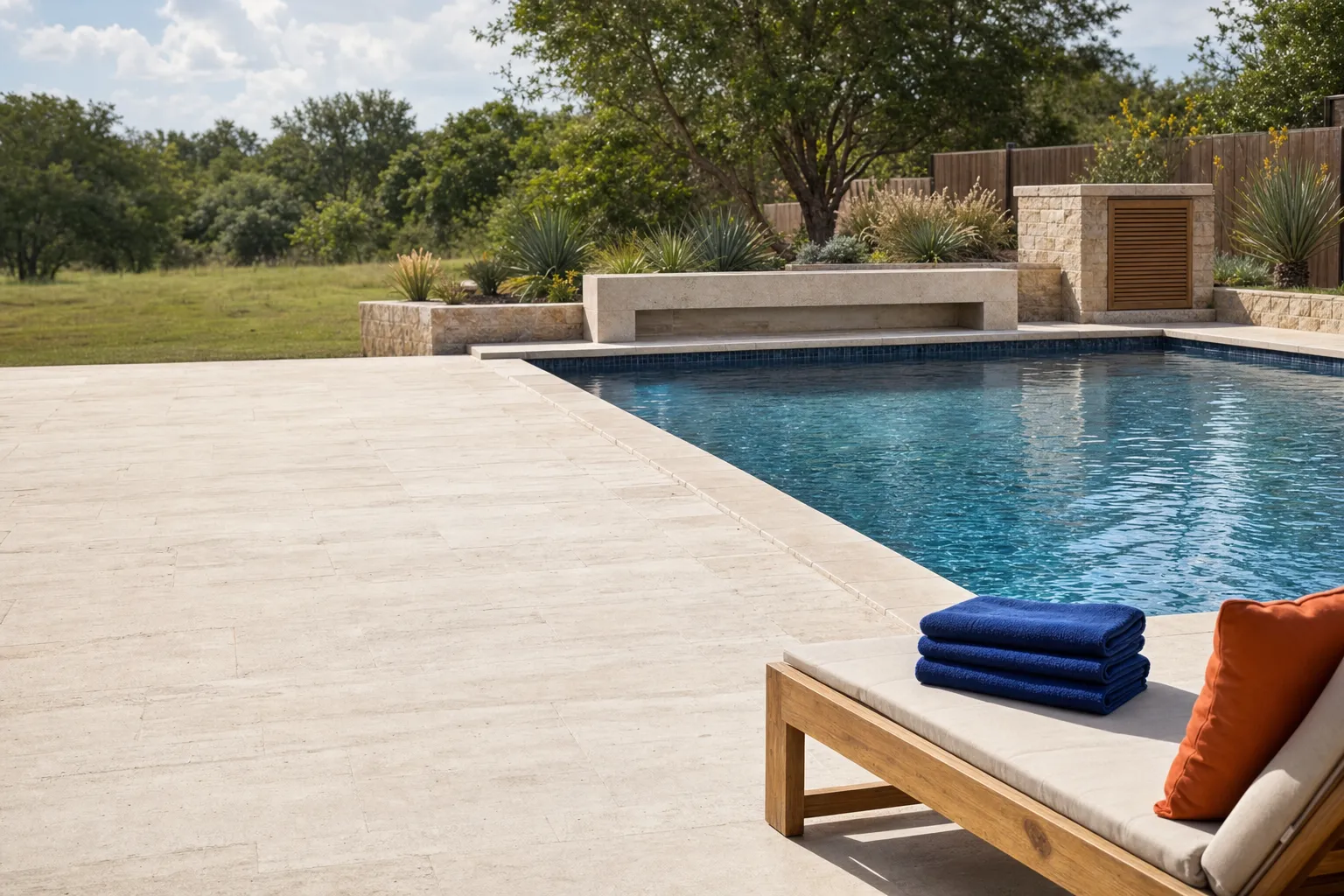
To prepare for pool plastering in Highland Village, Texas, drain and clean the pool, remove loose fixtures and accessories, confirm plumbing and electrical access, fix visible cracks or structural issues, and choose the right plaster finish for your lifestyle and water chemistry. We handle the technical work, and we ask homeowners to complete a few straightforward tasks so the project runs on schedule.
What is pool plastering and who should do it
Pool plastering is the process of applying a cement based finish to the interior surface of a concrete pool. The plaster layer covers structural concrete, provides a smooth or textured finish, and forms the visible waterline and pool interior. Plastering requires trained crews, controlled mixing and curing conditions, and equipment we bring to the job site. We do not recommend trying full plaster application as a DIY project because consistent thickness, proper curing, and accurate water chemistry on day one are essential to long term performance.
Why plaster selection and preparation matter in Highland Village
Highland Village sits in the Dallas Fort Worth area, where summers are hot, water tends to be alkaline and pool use is heavy for several months of the year. Those local conditions affect plaster choice and surface lifespan. A finish that handles Texas water chemistry, resists premature wear, and matches your maintenance preferences will save time and expense over the life of the pool.
We consider local water hardness, typical pool temperatures, and the surrounding landscape when recommending finishes. Our recommendations reflect that Petri Pools has worked on pools across Lewisville and the DFW area since 2000, and we factor in what we see most often in Highland Village neighborhoods.
Key concepts to know before plastering
- Substrate condition. Plaster must go over clean, stable concrete. Any loose or deteriorated material needs repair first.
- Finish types. Choices range from classic white plaster to quartz and pebble aggregate finishes, and each has different texture, color options and wear characteristics.
- Curing and water fill. After plastering, the new surface must cure and then be filled and balanced carefully on a schedule we manage.
- Timeline. Expect the overall job to include demolition or prep, repairs, plaster application, curing and start up. Weather and permits can change timelines.
- Maintenance needs. Some finishes require gentler chemistry and softer equipment brushes to avoid surface wear.
Plaster finish types compared
Below is a practical comparison of common finish categories so you can weigh appearance and durability when making choices for a Highland Village pool.
| Finish type | Appearance and texture | Typical longevity | What it needs from homeowners |
|---|---|---|---|
| White cement plaster | Classic smooth, bright white or tinted options | 6 to 10 years, depending on wear | Routine chemistry control and gentle cleaning |
| Quartz aggregate plaster | Colored mineral granules for subtle texture and color depth | 8 to 15 years when maintained | Balanced water chemistry and nonabrasive tools |
| Pebble and exposed aggregate | Textured, natural stone look; slip resistant | 10 to 20 years with proper care | Low to moderate cleaning intensity; periodic algaecide use |
| Polished aggregate | Smooth but with visible aggregate, upscale appearance | 10 to 15 years | Avoid aggressive brushes and follow recommended chemistry |
For more detail on each finish and samples we recommend for local water, see our guide to plaster finish types.
How we prepare a pool for plastering
We follow a staged process that keeps quality central and reduces the risk of problems after start up. Below are the high level steps our team takes on every job.
- Inspect the existing surface. We check for cracks, delamination, tile or coping issues, and make a plan for repairs.
- Repair and prep concrete. Any loose material is removed, cracks are structurally repaired, and the surface is profiled for adhesion.
- Protect equipment and landscaping. We isolate returns, skimmers and equipment, and protect decking and plantings during the work.
- Apply the finish. Our crew mixes and applies the chosen plaster under controlled conditions and follows the manufacturer specifications for that product.
- Cure and fill. We manage initial curing and then bring the pool back online with the correct fill protocol and chemical balancing.
- Final inspection and homeowner guidance. Before we leave, we show you how to care for the finish and what to expect in the first 30 to 90 days.
How to prepare your property before we arrive
Homeowner checklist before plaster day
- Clear the deck and gate the yard so our equipment has room to operate.
- Remove loose accessories like ladders, cleaners, and pool furniture from the work area.
- Arrange for vehicle access and a nearby water source, if requested by the crew.
- Turn off timed irrigation near the pool and cover or move delicate plants that could be affected by dust.
- Secure pets and plan for them to be off site during loud work and curing.
Pro tip: Take photos of pool finishes, tile and decking before work starts. That makes it easier to track finish cure and any unrelated changes to surrounding features.
Common questions Highland Village homeowners ask
- How long will my pool be out of service? Typical projects take several days for application and initial cure, then controlled filling and balancing. Total downtime often falls between one and two weeks, but we give a detailed timeline during the estimate phase.
- Will our pool need permits? Some projects, especially those involving structural repairs or equipment upgrades, may need local permits. We help identify permit triggers and can coordinate with local inspectors when required.
- Which finish is easiest to maintain? Quartz and higher quality pebbles tend to be more forgiving with staining and normal wear, but they still require balanced chemistry. We explain tradeoffs so you can choose what fits your maintenance preferences.
- What about plaster curing problems? Early problems are usually linked to improper curing, premature fill, or unmanaged water chemistry. That is why we control those steps and provide homeowner guidance for the first 30 days.
Related services we offer
If you are thinking about plastering, related updates are often useful at the same time. We typically coordinate these services so the overall project is more efficient.
- Pool Plastering for the plaster application itself, including finish selection and start up.
- Pool Resurfacing when the scope includes tile, coping or decking ties to the new surface.
- Pool Remodeling and renovation services if you are changing the pool shape, adding a water feature, or updating the surrounding living area.
Local considerations and nearby service area
Petri Pools is based in Lewisville and has worked across the Dallas Fort Worth area, including Highland Village. Local soil conditions, rainfall patterns and the prevalence of alkaline source water influence our material recommendations and maintenance plans. If you live in Highland Village, we will tailor the work to those local factors and to your property layout. For information about where we work, see our locations and service area page.
Helpful resources and standards
For industry standards and technical information, consult the Pool and Hot Tub Alliance standards for professional guidance on finishes and installation. For health related guidance about pool water safety, the Centers for Disease Control and Prevention provides practical recommendations on pool operation and public health measures.
We follow recognized best practices for mixing, application and start up, and we factor local water and climate conditions into product selection. If a permit or structural assessment is needed, we coordinate with local authorities and licensed inspectors as appropriate.
Key takeaway
Preparing a pool for plastering in Highland Village is a combination of homeowner readiness and professional control. Clear the area, secure plants and pets, decide on a finish that fits local water and maintenance preferences, and let a licensed crew handle repairs, application and cure. At Petri Pools, we bring experience from Lewisville and the DFW area and manage the technical steps so the new surface performs well for years.
Frequently asked questions
How soon can I refill the pool after plastering?
Refill timing depends on the plaster product and cure protocol. We follow manufacturer instructions and controlled cure steps. In many cases, the pool is filled with staged protocols that require monitoring; we manage that part so the surface cures as intended.
Will new plaster change the color of my water?
New plaster can briefly cloud water during initial fill and balancing. That is normal. We control the fill and chemical startup to minimize cloudiness and protect the finish.
Should tile or coping be replaced before plastering?
If tile or coping is loose, damaged or mismatched with the planned finish, replacing it during the prep phase reduces the risk of future repairs that could damage the new plaster. We inspect these items during our initial assessment and recommend the best timing.
Do different finishes affect how often I need to acid wash?
Acid washing addresses staining or mineral buildup and is not a routine maintenance task for most modern quartz or pebble surfaces when chemistry is kept in range. White cement plaster may need attention more often. We advise on maintenance intervals based on the chosen finish and local water conditions.
Learn more and read local reviews
Readwhat customers say about our work on our Google Business Profile, check directions and see recent project photos, and use our related pages to learn more about finishes and resurfacing options on this site.