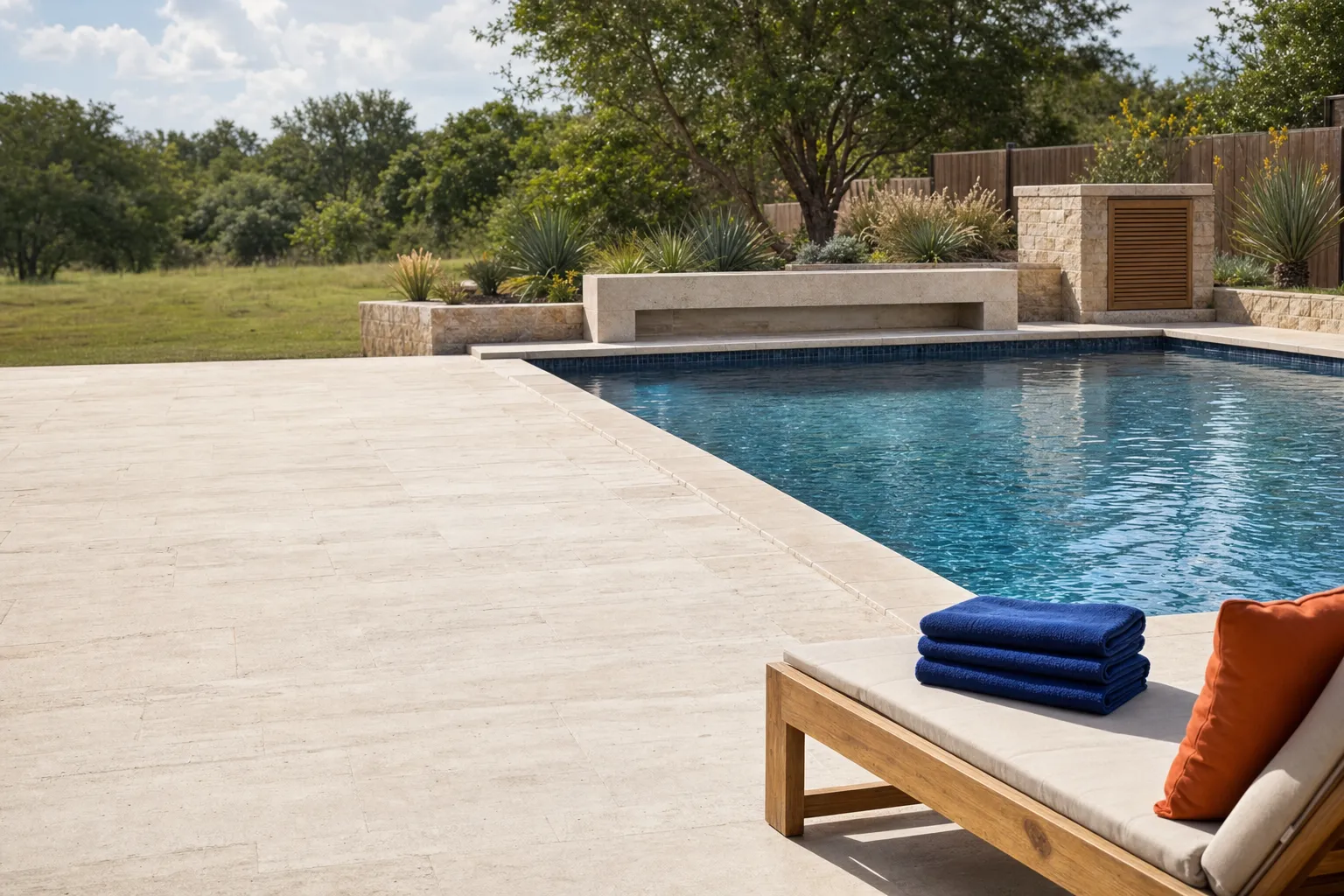
We build a pool remodeling plan around equipment integration, meaning we choose pumps, filters, heaters, controls and lighting first, lay out plumbing and electrical to fit the design, and coordinate schedules so the finished pool looks great and runs efficiently in Copper Canyon, Texas.
What equipment integration means for your remodel
Equipment integration is the process of selecting and arranging all mechanical and electrical systems so they work together with the finished pool. That includes circulation pumps and filters, heaters and heat pumps, automation and control panels, pool lights, salt systems or chemical controllers, and any specialty items like waterfalls or spa systems. For us, integration is both technical and practical: it ensures the equipment meets performance goals, fits the landscape and is serviceable over time.
Why equipment integration matters in Copper Canyon
Copper Canyon sits in the Dallas Fort Worth area, where summers are long and energy costs matter. Poorly integrated systems waste electricity, create noisy or unreliable operation and increase maintenance needs. By planning equipment early we avoid rework, keep mechanical rooms compact, meet local electrical and plumbing requirements and make sure the pool performs for years.
We also consider local factors homeowners and property managers face in North Texas, such as water hardness, HOA requirements, and how the pool will be used across seasons. With Petri Pools operating from Lewisville and serving the DFW area since 2000, we bring experience matching systems to real use patterns and local conditions.
Key concepts to include in a remodeling plan
- Load and flow first. Match pump size and plumbing diameter to the pool volume and planned features so filtration and water features run properly.
- Efficiency and controls. Variable speed pumps and automation save energy and let you schedule filtration for off peak hours.
- Placement and access. Locate equipment so it is accessible for service, and keep visual and noise impacts in mind.
- Electrical and permits. Coordinate the electrician and check local code requirements early to prevent delays.
- Future proofing. Leave space and conduit for upgrades like additional lights, a heat pump, or a smart controller.
How we approach equipment selection and layout
- Survey and goals. We start by confirming how you plan to use the pool, desired features and any performance targets such as faster turnover or quieter operation.
- System design. We calculate hydraulic requirements, select compatible pump and filter families and place equipment to minimize head loss and plumbing complexity.
- Electrical and controls coordination. We specify breakers, wiring and automation panels and coordinate with licensed electricians to meet local code.
- Integration review. Before construction we review schematics so the pool contractor, electrician and any landscape or lighting teams know where raceways and access points will be.
- Commissioning. After installation we run the system, balance flow, program automation and show you how to operate and maintain the equipment.
Comparing traditional systems and integrated systems
| Feature | Traditional separate systems | Integrated systems planned at remodel |
|---|---|---|
| Control and automation | Manual switches, separate timers | Unified automation for pumps, lights and heaters |
| Energy efficiency | Single speed pumps, higher operating cost | Variable speed pumps and scheduling lower long term costs |
| Maintenance | Multiple service points, harder troubleshooting | Centralized access and documented system simplifies service |
| Upgradability | Limited space and wiring | Conduit and spare capacity planned for future features |
Pre-remodel checklist for equipment integration
Decisions to make before work begins
- Desired features list: spa, heater, pool lights, water features, automation.
- Preferred performance: faster turnover, quiet operation, low energy use.
- Existing equipment to reuse or replace and condition of existing plumbing and wiring.
- Access needs for service, noise considerations and equipment location preferences.
- Permits or HOA approvals required for visible equipment or new electrical work.
Common questions homeowners ask
We answer the questions we hear most so you can set expectations and avoid surprises.
Pro tip: Including the electrician and pool service provider in planning meetings prevents costly relocations of conduit or junction boxes later.
- Will new equipment fit the existing pad? Often yes, but we check pad dimensions and clearances, and recommend enlarging the pad when adding items like a heat pump or a large automation panel.
- How much disruption does equipment work cause? Mechanical work is usually localized and does not require rebuilding the pool shell for most upgrades, but some plumbing rework or trenching may be needed for new features.
- How long does equipment integration add to a remodel? Planning and coordination add a few days to design and permitting, but they shorten construction by preventing rework. See our project timelines topic for typical schedules.
Related services and resources
Equipment integration is part of a complete pool remodel. For work that touches the pool surface or body, visit our pages on Pool Remodeling, Pool Resurfacing and Pool Plastering to see how equipment decisions interact with finishes and timelines.
For technical reading about coordinating schedules and required clearances, our Project Timelines topic and the Equipment Integration topic page explain details we commonly check during planning.
Helpful local considerations and locations
We work from Lewisville and serve homeowners throughout Dallas Fort Worth, including Copper Canyon. Local code departments and HOAs can add requirements for wiring, pad placement and visible equipment. We recommend checking permit requirements early, and we coordinate with local electricians and inspectors to avoid delays.
To learn what other homeowners in the area ask, see our location pages and local topics on the site for specifics about permits, seasonal use and common repairs.
Helpful external references
We follow industry standards and common practice when specifying equipment. The Pool and Hot Tub Alliance publishes standards and best practices for pumps, filters and safety that are useful when planning a remodel.
For practical information about water quality and pool chemistry basics, university extension resources provide clear guidance on circulation and sanitizer needs. For general construction and trade statistics that affect scheduling and availability of crews, the U.S. Bureau of Labor Statistics offers up to date information on construction occupations and trends.
Industry standards and educational resources help frame decisions, but a remodel still needs on site evaluation and field measurements to be accurate.
Key takeaway
Put equipment integration at the start of your pool remodeling plan. Early decisions about pumps, filters, controls and layout reduce cost, improve performance and protect the finished design. With our experience in Lewisville and the DFW area, Petri Pools coordinates the technical choices and timelines so the remodel delivers the look and function you expect.
Frequently asked questions
Can we keep our existing pump and just add automation?
Sometimes. We inspect the current pump and plumbing to confirm hydraulic compatibility and remaining life. If the pump cannot meet turnover or if plumbing creates excessive head, replacement is a better long term choice.
How do you decide between a gas heater and a heat pump?
We weigh upfront cost, operating cost, how often you heat the pool and space availability. Heat pumps are efficient long term in Texas climate for regular seasonal heating. Gas heaters provide rapid temperature increases for occasional use. We discuss tradeoffs with each customer.
Will automation change my maintenance routine?
Automation simplifies many tasks by scheduling pumps, lights and heaters, and by providing remote control. Routine maintenance like skimming, filter cleaning and chemistry checks still matter. We show you how automation fits into your maintenance plan during commissioning.
Do you include electrical work in the remodel?
We specify electrical requirements and coordinate with licensed electricians for connections and permits. Electrical work must be handled by a licensed professional to meet code.
How long does commissioning take?
Commissioning the equipment, programming the controller and balancing flow typically takes a day for most residential remodels. Larger projects with multiple features may require additional time to fine tune settings.
Learn more and check our local information
Read our customer reviews and find directions on our Google Business Profile, and explore related pages about equipment integration and remodeling on this site.