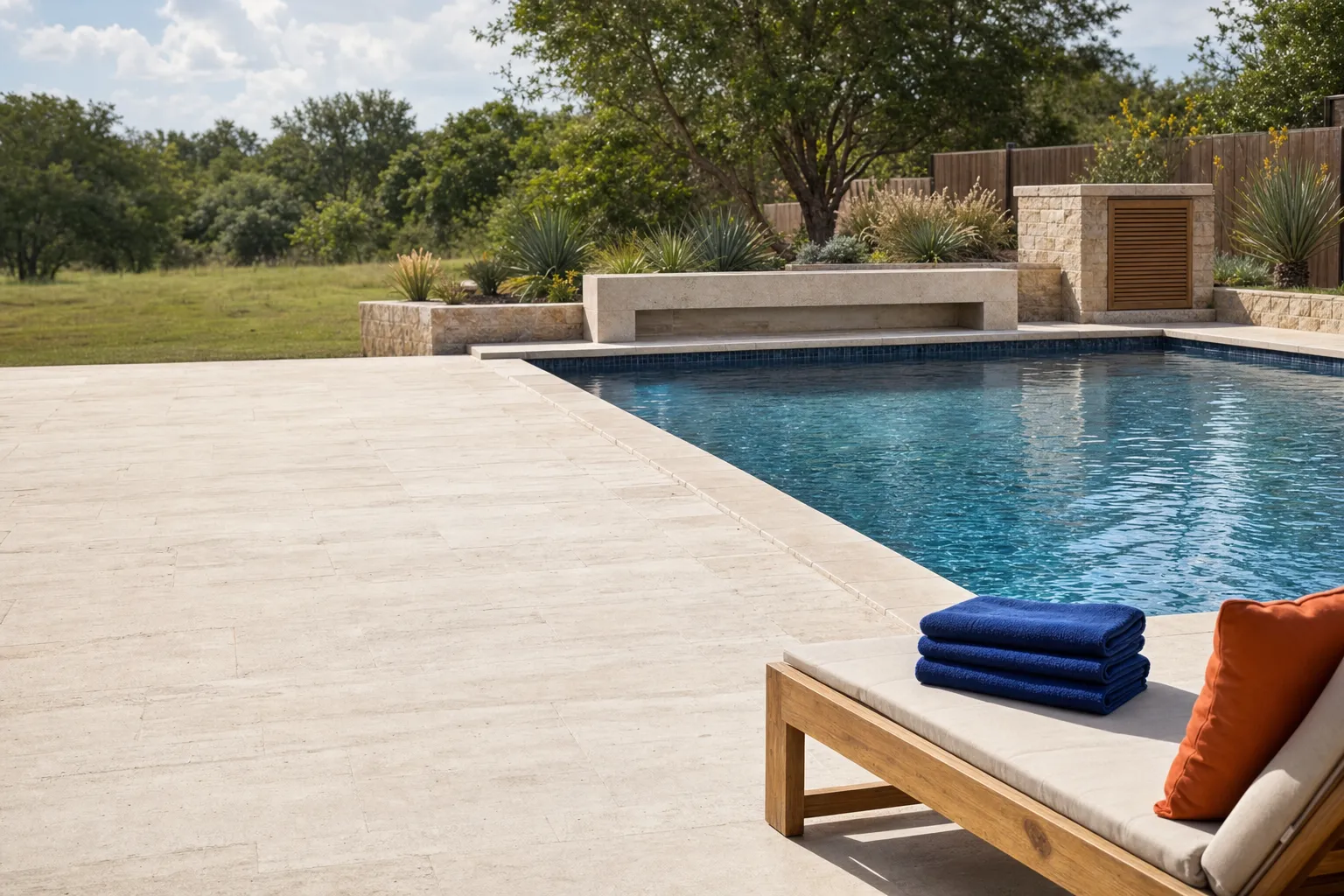
Pool remodeling needs vary across our service area because every yard, building, and owner has different site conditions, local rules and priorities. In Flower Mound those differences are often about lot slope, shade and outdoor living plans, while other parts of the Dallas Fort Worth area raise different structural and equipment considerations. We look at what changes the work, why it matters and how we plan remodels so the finished pool fits the place and how you want to use it.
What pool design principles mean for remodeling
Pool design principles are the practical rules we use to make a remodel work, last and be enjoyable. They include how the pool sits on the site, how water moves and circulates, what finish materials perform in local conditions, and how the pool connects to the house and outdoor living areas. Those principles drive choices from coping and finish to equipment sizing and placement.
in one line
Remodeling needs differ because of site specific factors like slope, existing structure and finish condition, local climate and codes, homeowner use and budget, and neighborhood rules such as HOA regulations, all of which change the scope, materials and timeline for the project.
Why this matters in Flower Mound and the Dallas Fort Worth area
Local conditions shape what we recommend. In Flower Mound, yards often prioritize outdoor living that ties into patios, decks and master suites. In other nearby cities, homeowners may prioritize energy efficient equipment or drought conscious landscaping. Whether a pool sits on flat clay soil, a sloped lot, or within an established neighborhood with an HOA, those facts change structural needs, drainage and permit work.
Because Petri Pools is based in Lewisville and has worked across the Dallas Fort Worth area since 2000, we plan remodels with local conditions and typical permit expectations in mind. We can explain how a choice that works well in one neighborhood might need adjustment for another.
Key concepts that change a remodel
- Site constraints and grading. Lot slope, retaining walls and nearby trees determine excavation, drainage and coping choices.
- Structural condition. Older shells can hide hairline cracks, steel corrosion or bond coat failure, which change whether a surface repair is enough or a more substantial rebuild is required.
- Finish materials. Plaster, quartz and aggregate finishes age and behave differently. Color and texture affect heat gain and maintenance needs.
- Equipment integration. Pump and filter sizing, heater or heat pump selection, and automated controls depend on pool volume, desired turnaround time and energy targets.
- Hydraulics and circulation. Proper return placement, skimming capacity and turnover rate are essential for water quality and reducing chemical use.
- Access and safety. Steps, handrails, shallow shelves and barriers often must meet local code or HOA rules and are part of the design conversation.
- Outdoor living and landscape. A remodel is often about connecting the pool to patio, kitchen, fire features and privacy planting.
- Permits and codes. Local building codes and permit processes can add time and specific construction requirements.
Choosing the right scope for your remodel
Not every pool needs a full overhaul. Matching scope to the underlying issue and your goals saves money and avoids surprises. Below we compare three common remodel scopes to help you know which path is likely for your property.
| Project type | When it fits | Typical scope |
|---|---|---|
| Cosmetic refresh | Surface wear, outdated color, minor leaks not present | Resurface finish, update tile band, minor coping repairs, new paint or plaster |
| Equipment and circulation upgrade | Poor water quality, high energy bills, insufficient turnover | Replace pumps and filter, add energy efficient controls, rework returns and skimmers |
| Full remodel | Structural damage, major layout changes, or a new outdoor living plan | Demolition of key elements, structural repairs, new plumbing and electrical, finish and landscape integration |
How we evaluate a remodel, step by step
- Site review. We walk the yard, note slope, shade, utilities and how the pool sits relative to the house and landscape.
- Technical inspection. We check shell soundness, visible finish issues, equipment condition and plumbing access.
- Define goals. We translate what you want to use the pool for into a practical scope, whether it is more usable shallow area, better lighting or lower operating cost.
- Options and tradeoffs. We present material choices, expected longevity and maintenance needs so you can weigh appearance versus durability.
- Permits and code check. We confirm required permits and any HOA guidelines that affect design or fencing.
- Schedule and sequencing. We plan work to avoid destructive surprises and to sequence structural, hydraulic and finish trades efficiently.
- Final inspection and commissioning. We tune equipment, explain care for the finish and hand over operating guidance.
Pro tip: If your yard plan includes new hardscape or an outdoor kitchen, involve the pool plan early. Coordination reduces later rework and keeps the finished area cohesive.
Common questions we hear
How does the local climate affect finish choices?
Sun exposure and seasonal temperature swings affect heat absorption and chemical behavior. We pick finishes and colors that balance appearance with how quickly a surface will warm in direct sun, and we recommend maintenance schedules that fit local conditions.
Will a resurfacing fix all problems?
Resurfacing addresses wear and cosmetic issues, but it will not fix underlying structural problems or severely degraded plumbing. A technical inspection helps determine whether resurfacing is an appropriate solution.
How long does a remodel usually take?
Timelines vary with scope. A cosmetic resurface typically takes less time than equipment upgrades that require mechanical coordination or a full remodel that involves structural work. We plan realistic timelines after the site review so you know what to expect.
Related services we provide
Depending on the findings, a remodel often involves one or more of our core services. We link recommendations below to pages where you can learn more about what each service includes.
- Pool Remodeling, when layout changes or heavy structural work is required
- Pool Resurfacing, for finish renewal and color updates
- Pool Plastering, for new plaster or aggregate finishes
- Concrete Pool Resurfacing, for decks and surrounding concrete repairs
Related locations and how they change choices
Neighborhood character and local regulations matter. Flower Mound pools often prioritize outdoor living connectivity and privacy. Closer to Lewisville and other parts of the Dallas Fort Worth area, you may see different priorities such as energy efficiency or drought tolerant landscaping. When we plan a remodel we consider the local context so the finished project fits the neighborhood and your lifestyle.
Learn more about where we work and the specific neighborhoods we serve on our locations hub.
Helpful resources for planning
These topics dive into the technical pieces that affect remodel decisions. We link to specific guides that explain materials, timelines and permit considerations in more detail.
- Pool Design Principles, for the design ideas that guide every remodel
- Renovation Planning, on scheduling and sequencing a remodel
- Permits And Codes, for an overview of typical permit needs in our area
Frequently asked questions
How do I know whether to resurface or fully remodel?
Start with a technical inspection. If the shell and plumbing are sound, resurfacing can refresh the pool. If there is structural damage, poor hydraulics or you want layout changes, a full remodel is usually the right choice.
How long will a new finish last in Flower Mound?
Finish longevity depends on material choice, water chemistry and usage. Proper installation and a regular maintenance routine extend life. We cover finish types and realistic longevity on our plaster durability and finish longevity pages.
Do remodels usually need permits?
Many remodels require permits, especially if structural, electrical or plumbing work is involved. Permit requirements vary by city and by project scope, which is why we check local codes as part of the planning process.
Can we change the pool shape or depth during a remodel?
Yes, but changing shape or depth often triggers additional structural work, revised permits and sometimes relocation of equipment. We explain the tradeoffs and required steps during the design phase.
Key takeaway
Remodeling is not one size fits all. Site conditions, homeowner priorities, finish choices and local rules shape the work. We evaluate the yard, the shell and your goals before recommending a scope that balances cost, durability and enjoyment.
Learn more and see where we work
Check our Google Business Profile to read recent reviews and get directions. For deeper guidance on design, finishes and project planning, browse our related pages on this site.