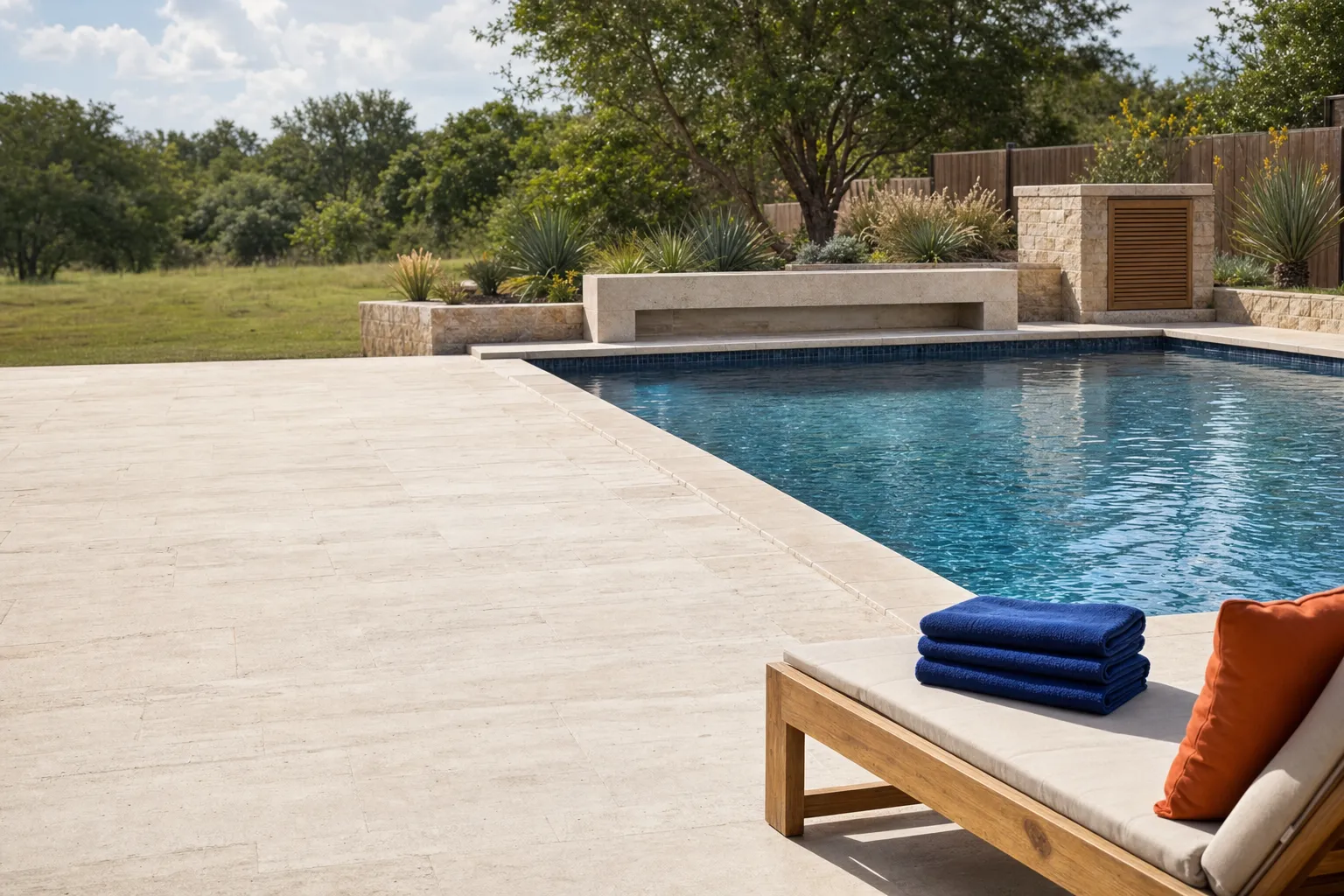
Aggregate finishes are plaster surfaces that expose small pebbles, quartz, or decorative glass within the cementitious layer so the finished pool surface is textured, durable and visually distinctive. They change the resurfacing process because they require different surface preparation, application techniques and curing than a smooth plaster finish, and they usually last longer with proper care.
What an aggregate finish is and why homeowners choose it
In plain terms, an aggregate finish mixes small stones or mineral granules into a cement based pool plaster so the outer layer is made of those particles instead of a smooth white plaster surface. Homeowners choose aggregate finishes for three practical reasons: they resist wear and staining better than plain plaster, they provide improved traction underfoot, and they offer a range of colors and textures that change the look of the pool without full remodeling.
For homeowners in Double Oak and the broader Lewisville and Dallas Fort Worth area, aggregate finishes are a popular choice when the goal is a durable update that also upgrades the appearance of the pool shell. We explain the tradeoffs below so you can decide whether it fits your repair or resurfacing plan.
Common types of aggregate finishes
Not all aggregate finishes are the same. The main varieties you will see are exposed pebble, quartz aggregate, and glass or recycled glass blends. Each has a different look, feel and maintenance profile.
- Exposed pebble finish. Small natural pebbles embedded in plaster, sometimes hand troweled or machine finished to reveal the pebbles. The surface is textured and often warm in tone.
- Quartz aggregate finish. Manufactured quartz blends mixed into the cement base. Quartz offers more consistent color, fine texture, and good resistance to chemical wear.
- Glass aggregate blends. Decorative glass or recycled glass mixed into the finish for unique color and contrast. Glass can be bright and reflective, but it changes the feel underfoot.
Each material affects the pool color, reflected light, and perceived depth. If you want a subtle, natural stone look choose pebbles. For a refined, consistent color choose quartz. For a striking, modern look consider glass or specialized blends.
How aggregate finishes affect the concrete pool resurfacing process
Choosing an aggregate finish changes three key parts of the resurfacing work: preparation, application, and curing.
- Assessment and repair. We inspect the shell for structural issues, cracks, delaminations and old finish failures. Any structural repairs must be completed before a new aggregate finish is installed.
- Surface preparation. The existing surface is profiled and cleaned to create a strong bond. That can mean acid etching, mechanical abrasion or full removal of failed plaster. Proper profiling is more critical for aggregate finishes because the bond layer has to hold the heavier aggregate mix.
- Base coat and leveling. A suitable base coat or scratch coat is applied to correct small surface irregularities. For pools with large repair areas we use cementitious leveling products designed to accept the aggregate blend.
- Aggregate application. The aggregate plaster is mixed on site and sprayed or troweled into place. The installation method changes with material choice; exposed pebble is often hand finished to reveal stones, while quartz mixes are typically sprayed and floated to the required exposure.
- Curing and initial fill. Curing protocols vary. Most aggregate finishes need careful water chemistry management during the first weeks, and some trims of aggregate require an initial partial fill and slow fill to control curing stresses.
Those steps add time and attention compared with a standard cement plaster resurface. The result is usually a finish that wears differently and often lasts longer, provided the installation and water care are done correctly.
How we decide which aggregate material to use
We evaluate three practical factors before recommending a finish for a particular pool in Double Oak or Lewisville.
- Existing shell condition and repairs required, which determine whether a heavier aggregate is safe to install.
- Desired look and the surrounding landscape, because aggregate color and texture change how the pool reads against stone, decking and plantings.
- Maintenance preference and pool use, since some aggregates are easier to maintain for high use pools or vacation rental properties.
We document these choices during our project planning so the homeowners and property managers know how appearance, longevity and maintenance will trade off.
Checklist for choosing an aggregate finish
- Inspect the pool shell for cracks, delamination and past repairs.
- Decide on color family based on coping, deck and landscape.
- Match texture to use case, for example a coarser pebble for traction around a shallow beach area.
- Confirm warranty terms for the specific finish product and installation method.
- Plan for water chemistry attention during the first 30 to 90 days after installation.
Pro tip: Photograph your pool in the afternoon light when choosing a finish. Natural daylight will show how color and aggregate reflect off the water, which is how you and guests will see the pool most often.
Maintenance expectations for aggregate finishes
Aggregate finishes are not maintenance free, but they can be easier to keep looking good than plain white plaster. The main ongoing items are water chemistry, surface cleaning, and occasional scaling or staining treatment.
- Keep total alkalinity, pH and calcium hardness in recommended ranges to reduce etching and scaling.
- Brush the finish with a pool brush appropriate for textured surfaces to prevent grime buildup in the matrix.
- Address stains promptly with products made for aggregate finishes, and avoid abrasive pads that could dull the exposed particles.
Watch out: Using a heavy acid wash or abrasive scrub on an aggregate finish can expose voids or change the appearance permanently. Those repairs are avoidable with regular chemical maintenance and the right cleaning products.
How aggregate finishes compare to plain plaster
We weigh these tradeoffs when advising customers.
Pros
- Improved abrasion and chemical resistance compared with traditional plaster.
- Better traction underfoot and fewer visible stains.
- More color and texture variety to match the landscape.
Cons
- Higher initial cost and longer installation time than standard plaster.
- Requires careful substrate repair and profiling prior to installation.
- Some blends can feel rougher under bare feet, which affects shallow areas and steps.
Typical timeline and what to expect during the project
Every project differs depending on repairs and weather, but a basic concrete pool resurfacing with an aggregate finish follows this timeline:
- Inspection and scope. We inspect the pool, document repairs and agree on finish choice. That usually takes a day.
- Repairs and substrate prep. Structural and surface repairs can take several days to a week depending on extent.
- Finish application. Applying the aggregate mix and initial cure typically takes two to four days.
- Curing and fill. The pool fill and conditioned curing period varies from a few days to a week. Full chemical balancing and a managed ramp up of normal use often takes 30 to 90 days.
We keep homeowners informed at each stage so there are no surprises about access, timing or temporary water restrictions.
Common questions we hear from homeowners in Double Oak and Lewisville
Below are short answers to the questions we get most often. If you are planning resurfacing, these points will help you prepare.
- Will an aggregate finish make my pool colder or warmer? Aggregate color affects how the pool absorbs sunlight. Darker aggregates can make the water feel slightly warmer, while lighter aggregates reflect light and keep a brighter look.
- Can I install an aggregate finish over my old plaster? In some cases yes, but the old finish must be well bonded and profiled. Often the failing finish needs to be removed before installing a reliable aggregate overlay.
- How long will an aggregate finish last? Lifespan depends on material, installation quality and maintenance. Properly installed aggregate finishes commonly last longer than standard plaster when maintained with correct water chemistry.
Key takeaway
Aggregate finishes offer a durable, attractive option for concrete pool resurfacing, but they require more careful preparation and a different maintenance approach than smooth plaster. For Double Oak and Lewisville properties our experience shows that correct substrate repair, material choice and early water care are the three factors that determine long term performance.
Frequently asked questions
How do aggregate finishes change my pool maintenance routine?
Aggregate finishes need the same attention to water chemistry as other plaster finishes, but you should use brushes and cleaning tools made for textured surfaces and inspect for staining in crevices. Early season scale control and routine brushing prevent larger issues.
Are aggregate finishes suitable for pool steps and tanning ledges?
Yes, but we often specify a finer aggregate or a different texture on steps and shallow areas to balance traction and comfort underfoot. Design choices are part of the planning discussion.
Will the finish color match my sample exactly?
Samples and renderings are guides. Natural lighting, water depth and the surrounding deck affect perceived color. We show samples in place when possible and explain how light will change the look.
Find out how an aggregate finish would look on your pool
Read more about finish choices on our Pool Finish Materials page, review our Concrete Pool Resurfacing service details, or learn about our work in Lewisville, Texas to see examples and planning notes.
Concrete pool resurfacing service details
Projects and service area in Lewisville, Texas
Check Petri Pools Google Business Profile to read customer reviews and get directions to our Lewisville location.