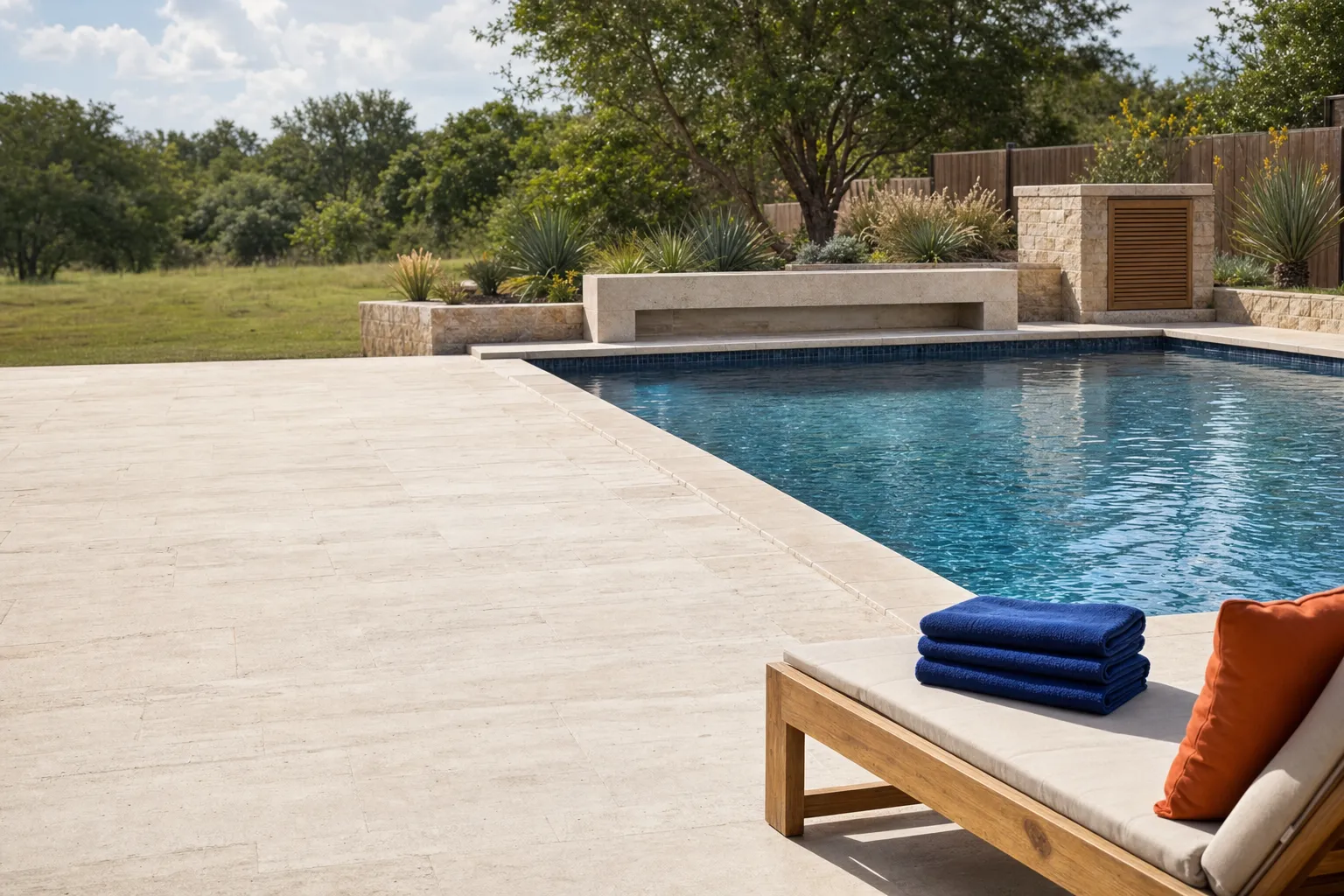
A strong concrete pool resurfacing plan defines the pool construction and damage, specifies the right finish and repairs, and sets a clear timeline for preparation, application and curing so the new surface bonds and lasts. At Petri Pools we start every job with a site inspection and a written scope that lists repairs, finish options and a realistic schedule so homeowners in Lewisville know what to expect.
What a resurfacing plan must cover
Not every resurfacing project is the same. A solid plan covers condition, method, materials, access and long term maintenance so the finished surface performs for years.
- Detailed inspection and documentation. Record the existing finish, visible cracks, tile and coping condition, waterline staining and equipment performance.
- Substrate and structural assessment. Confirm the pool shell material, reinforcement condition and whether the shell was built as Gunite or shotcrete, since repair methods differ for each. For a general definition of gunite see the Wikipedia overview on Gunite.
- Finish selection matched to use. Decide between plaster, exposed aggregate, pebble finishes or specialty coatings based on desired look, slip resistance and longevity.
- Surface preparation and repair scope. Specify how old plaster will be removed, where cracks will be repaired, and where tile or coping must be reset so the new finish bonds to a sound surface.
- Equipment and integration notes. Note existing pumps, heaters, automation and how they will be isolated or updated during the project so equipment start up does not damage the new finish.
- Drainage, deck and surrounding work. Include access routes, deck protection, and connections to patios or waterfalls that affect scheduling and finish details.
- Timeline and cure periods. Set realistic windows for preparation, application and the final water chemistry stabilization to protect the new surface.
- Permits and inspections. List required local permits and inspections in Lewisville so the work meets municipal requirements.
Why Gunite and shotcrete matter to the plan
Gunite and shotcrete are ways concrete is placed and compacted. They influence how we assess repairs, how we remove loose finishes and what repair materials we specify.
Gunite is a dry mix pneumatically applied at the nozzle, while shotcrete uses a wet mix pumped through the hose. The structural differences that result, and the way they were consolidated during original construction, change how we approach crack repair, delamination and bonding. For a background on how the methods differ see the Gunite article on Wikipedia.
Typical project timeline: main stages
- Site inspection and written scope. We document condition, take photos, and prepare a scope that lists repairs, finish options and a timeline.
- Pre work and permitting. Obtain any local permits and schedule inspections that affect start dates in Lewisville.
- Access, protection and draining. Prepare the yard and protect decking, landscaping and equipment before work begins.
- Surface preparation and repairs. Remove unsound finish, make structural repairs to the shell, fix tile or coping that interfere with the new surface.
- Finish application. Apply the chosen finish under controlled conditions and by experienced crews familiar with plaster, pebble or aggregate systems.
- Curing and initial start up. Allow manufacturer recommended cure periods before refilling and balancing water chemistry to protect the finish.
- Final inspection and homeowner orientation. Walk the finished project with the homeowner, note maintenance items and leave care documentation.
Homeowner checklist before resurfacing
- Clear pool area and provide safe access for crews and equipment.
- Plan for landscaping protection and vehicle access for material delivery.
- Review the written scope so you understand what repair work is included.
- Ask about finish options, expected life, and routine care requirements.
Watch out: Surface appearance problems often come from unresolved structural issues or poor surface preparation. A plan that skips a full assessment risks early delamination, staining or premature wear.
Pro tip: Ask for written cure and start up recommendations from the finish manufacturer so the new surface receives the correct first fill and chemical schedule.
How we choose finishes and tradeoffs to consider
Finish choice affects appearance, lifespan and maintenance. We evaluate desired color and texture, expected swimmer traffic, water chemistry sensitivity, and budget when recommending options.
- Plaster finishes. Smooth, economical, with a broad color range. They are a practical choice for many homeowners, but they wear differently depending on water chemistry and use.
- Pebble and exposed aggregate. More durable and textured, these finishes resist wear and show depth of color. They can be pricier and need experienced installers.
- Specialty coatings. Epoxy or polymer overlays are options for some pools, especially when the surface needs a thin, durable membrane and when underlying cracks are addressed.
We explain the tradeoffs for your pool and list maintenance expectations so your choice fits lifestyle and long term goals. For broader renovation planning topics see our page on renovation planning.
Common questions homeowners ask about resurfacing
We answer the questions we hear most often so you can evaluate a plan with confidence.
- Will resurfacing fix leaks? Minor leaks from plaster cracks or tile joints can be addressed during resurfacing, but a thorough assessment is required to locate active structural leaks.
- How long will the new finish last? Life expectancy depends on finish type and care. Pebble and exposed aggregate finishes typically last longer than standard plaster when maintained properly.
- Do I need to update equipment? Older pumps and heaters sometimes fail to meet the needs of a newly finished pool. We note equipment condition in our scope so owners can budget for upgrades if needed.
Key takeaway
A strong concrete pool resurfacing plan is more than a finish choice. It starts with a careful inspection, matches finish selection to the pool shell and usage, documents required repairs and permits, and includes realistic timelines for preparation and curing so the new surface performs. When planning a resurfacing project in Lewisville, rely on a written scope that lists repairs, materials and timing so there are no surprises.
Frequently asked questions
How long does concrete pool resurfacing usually take?
Typical projects run from a few days for small cosmetic overlays to multiple weeks for full repairs plus curing and start up. The exact schedule depends on the condition of the shell, the extent of repairs, the finish selected and local permitting timelines.
What is the difference between Gunite and shotcrete for pool shells?
Both are sprayed concrete methods. Gunite uses a dry mix that is hydrated at the nozzle, while shotcrete is a wet mix conveyed through the hose. The placement method affects consolidation and repair techniques. For background on the terms see the Wikipedia entry on Gunite.
Will resurfacing change the look of my pool
Yes. You can change color, texture and the overall character of the pool surface when you resurface. We help homeowners weigh color choices and finish types so the new surface matches the yard and intended use. See our related service page on concrete pool resurfacing for examples and typical options.
Do Lewisville permits affect the schedule?
They can. Local permits and inspections sometimes add days to the timeline. We include permit coordination in our project scopes and note expected lead times for Lewisville municipal requirements on our site location page for Lewisville, Texas.
Learn more and read customer reviews
Read our Google Business Profile to see project photos and customer reviews, check directions, and learn more about Petri Pools work in Lewisville. For related reading, see our pages on concrete pool resurfacing, renovation planning, and pool finish materials.