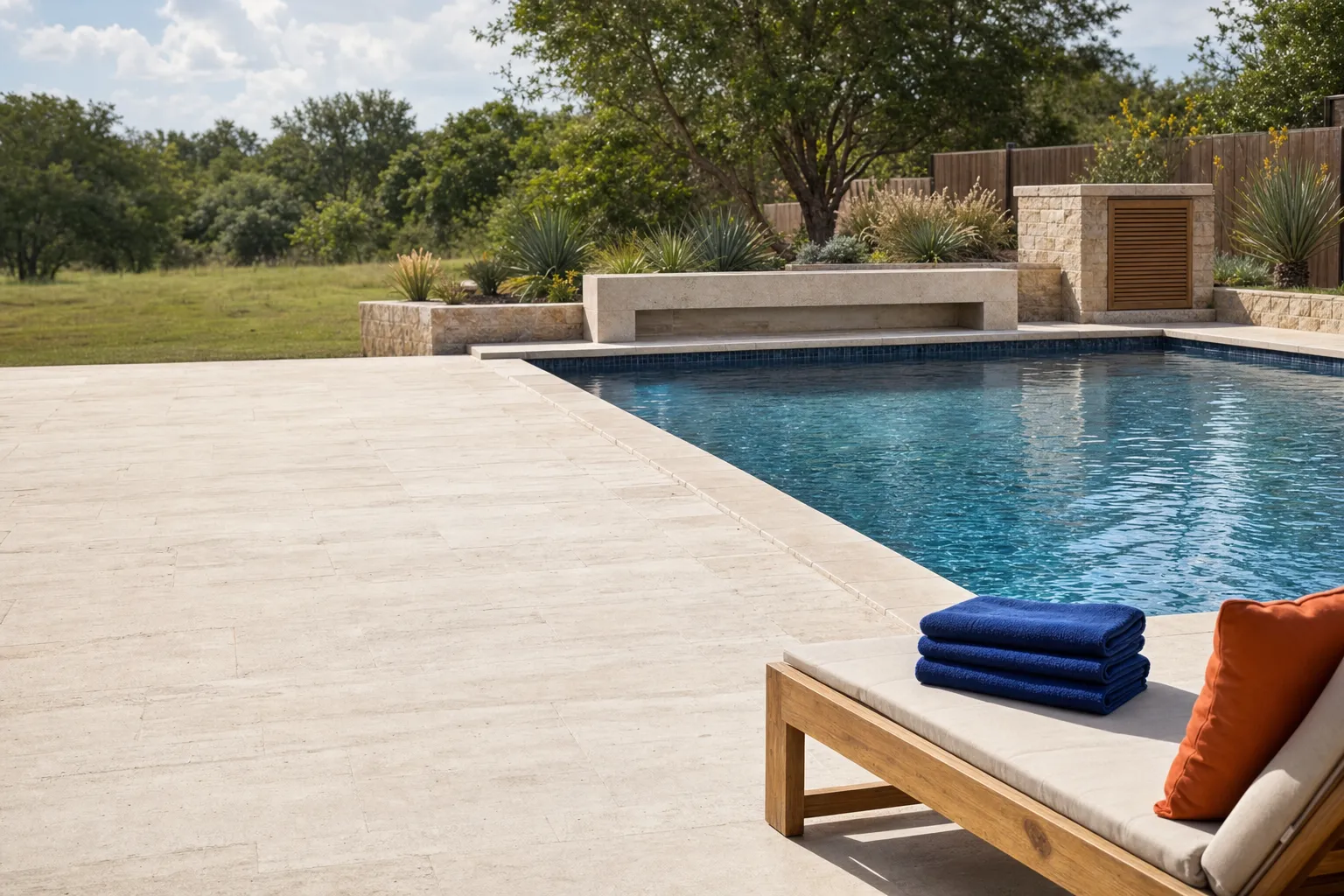
Local conditions in Lantana change pool renovation budgets by affecting how much demolition, structural work, material replacement and permitting are needed. In short, soil and drainage issues, mineral content in the water, seasonal weather, site access and local code requirements are the things most likely to add time and cost to a project.
What is renovation budgeting for pools
Renovation budgeting is the process of estimating the total cost to update an existing pool so it meets your goals for appearance, function and longevity. A reliable budget accounts for finish materials, equipment, structural repairs, site work, permits and contingency for surprises we often find once work begins.
We approach budgets as a range, not a single number, because on-site conditions in neighborhoods like Lantana often change the scope as a project proceeds.
Why local conditions matter in Lantana
Costs are not set only by chosen finishes. Local, site specific factors in Lantana change how much work is required before we can install a new finish or equipment. These factors influence labor, materials and schedule, which all affect your final budget.
For homeowners in Lantana and nearby communities, understanding these influences up front helps avoid surprises and sets realistic expectations for time and investment.
Key factors that change a pool renovation budget
Primary drivers
- Soil and drainage. Expansive clay or poor yard drainage can shift coping, crack shells, or require additional drainage work.
- Water chemistry and mineral staining. High calcium or iron levels make surface prep and staining removal more intensive.
- Material choice. Natural plaster, pebble finishes and tile differ in cost and lifecycle, and some finishes require more surface preparation.
- Structural issues. Cracks, delamination or movement need repair before resurfacing or remodeling.
- Equipment upgrades. Replacing pumps, filters or installing variable speed equipment changes the mechanical and electrical scope.
- Access and staging. Tight yards or narrow gates increase labor time or require special equipment to move materials.
- Local codes and permits. Municipal permit rules and inspection schedules can add to the timeline and administrative cost.
Secondary influences
- Season and weather. High heat or rainy season can slow curing and extend the schedule.
- Existing finish condition. Severe pitting or old coatings may need full removal rather than patching.
- Landscape and hardscape tie ins. Changes to decking, lighting or water features expand the project beyond the pool shell.
How we evaluate your pool for a realistic budget
- Site visit and visual inspection. We look at finish condition, visible cracks, coping, deck interface and site access to estimate likely repairs.
- Water and material sampling. If staining or scaling is present, testing helps determine the level of surface preparation needed.
- Check for structural movement. We assess settlement or cracking that may require structural repair before resurfacing.
- Equipment review. We inspect pumps, filters, heaters and automation to decide what needs replacement or integration.
- Permitting and code review. We verify local permit needs and any code-driven upgrades that affect the scope and schedule.
- Preliminary estimate with contingency. We present a budget range with line items and a contingency to cover common unknowns discovered when work begins.
Checklist for homeowners preparing a realistic budget
Before you approve a budget
- Understand the desired outcome, from a simple resurfacing to a full remodel with lighting and water features.
- Have a recent pool inspection report or let us perform one so hidden issues are identified early.
- Ask whether the estimate includes structural repairs, permit fees, demo, disposal and contingency.
- Confirm which finish materials are proposed and review their expected lifespan and maintenance needs.
- Plan for seasonal timing, since weather can change project length and cost.
Common questions homeowners ask about budgeting
Below are frequent concerns we hear from Lantana area homeowners when planning a pool renovation.
- How much should I set aside for unexpected repairs. A 10 to 20 percent contingency is common, depending on the pool age and visible condition.
- Will my local soil require structural work. Expansive clay near parts of Denton County can cause movement. If we see movement signs, the budget must include stabilization or targeted repairs.
- Does finish choice change long term cost. Yes, finishes like aggregate pebble are more durable but cost more up front, while simple plaster is less expensive initially but may need resurfacing sooner.
Related services and next steps
Our work covers the full range of renovation needs, from surface updates to mechanical upgrades. For projects that start with resurfacing and grow into a remodel, we provide clear transition plans so budgets remain transparent.
Learn more about our pool renovation services on our Pool Renovation page: Pool renovation and remodeling services.
Related locations we serve in the Lewisville and DFW area
We are based in Lewisville and serve neighborhoods across the region. If you are planning a project near Lewisville, review site specific guidance on our Lewisville location page: Pool services in Lewisville Texas.
Helpful resources and standards
When planning a budget, it helps to reference general guidance and local rules. A few useful resources include the Swimming pool overview on Wikipedia for background on construction terms, the City of Lewisville building permit information for municipal rules and the Pool and Hot Tub Alliance for industry standards on equipment and safety.
Useful references we consult:
What good looks like in a renovation budget
Good budgeting separates must have items from nice to have items, shows line item costs, and includes a clear contingency. It also aligns the proposed materials with expected longevity and maintenance. A well prepared budget helps you make tradeoffs that match long term goals for your outdoor living area.
Key takeaway
Local site conditions in Lantana commonly alter pool renovation budgets through soil and drainage factors, water chemistry, access and permitting. Expect a budget range and a contingency, and get an on site evaluation so the estimate reflects what we will actually find.
Frequently asked questions
How much contingency should I plan for a pool renovation in Lantana?
Plan for a contingency of 10 to 20 percent depending on pool age and visible condition. Older pools or those with signs of structural movement should lean toward the higher end of that range.
Will local permits increase my renovation cost?
Yes. Permit fees and required inspections add time and administrative cost. Permit needs vary by project scope and local rules, so we verify requirements early in the planning stage.
Can mineral staining be removed without replacing the finish?
Minor staining sometimes responds to aggressive surface prep and specialty cleaning. Deep staining or etched surfaces often require removing and replacing the finish to guarantee a uniform result.
Does choosing a premium finish reduce lifetime cost?
Higher quality finishes like aggregate blends normally cost more upfront but tend to last longer and resist damage better than basic plaster. That can lower lifecycle cost when you factor in fewer resurfacing cycles.
Learn more and read local reviews
For specific guidance on budgeting for your pool renovation in Lantana, check our renovation budgeting resources and services. You can also read customer reviews and get directions on our Google Business Profile to see recent projects and local feedback.