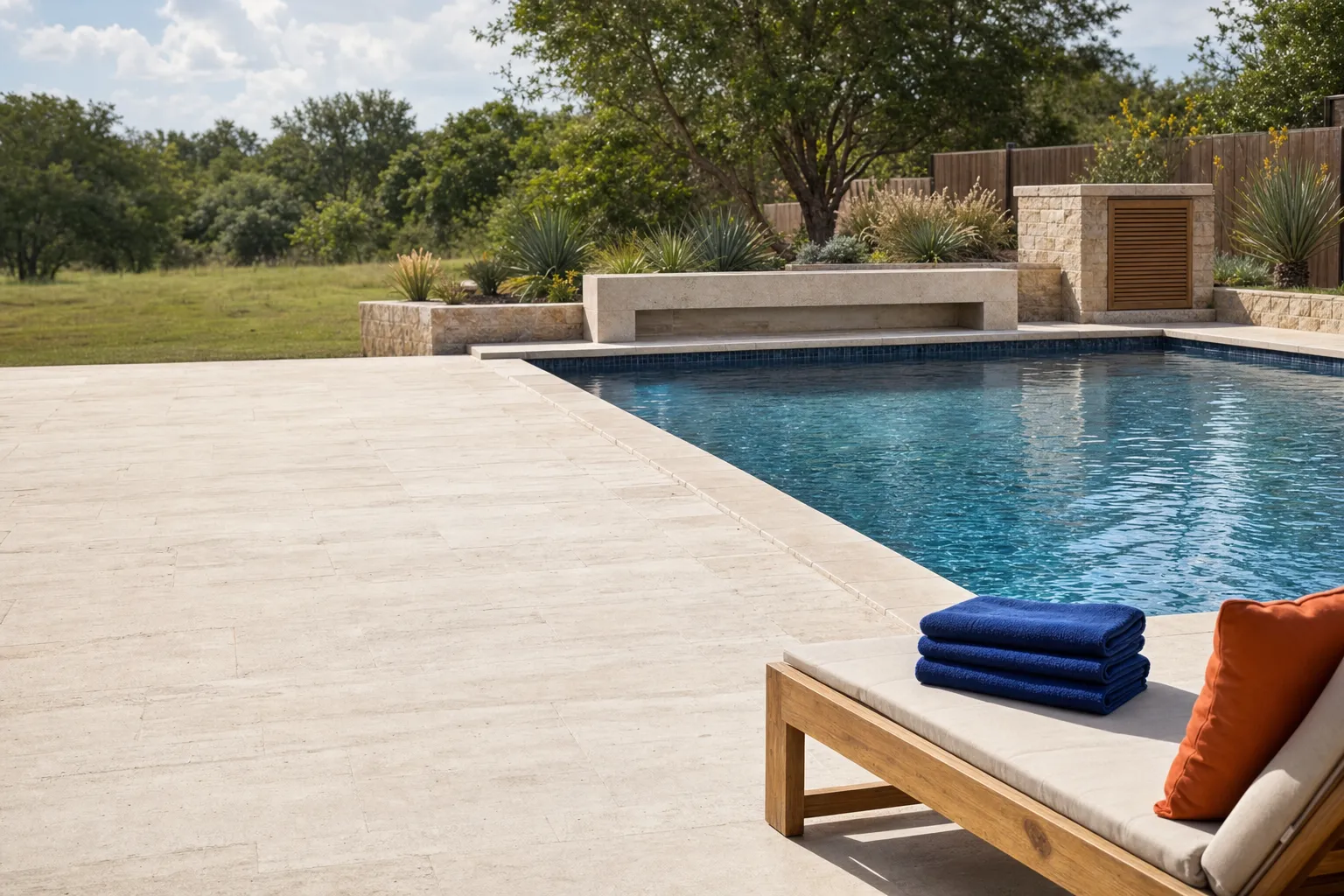
Before you start pool resurfacing, decide on the finish material first. The finish determines your pool color, texture, expected lifespan, maintenance needs and how the pool performs in Lewisville heat. At Petri Pools we help homeowners match the right finish to their budget, water system and long term plans.
What is a pool finish and why it matters
A pool finish is the material applied to a concrete pool shell to make the surface watertight and attractive. Common finishes include traditional plaster, pebble or aggregate blends, quartz mixes and tile. The finish is the visible part of your pool and it influences the pool color, slip resistance, how easy the surface is to clean, and how the water looks under sunlight.
Choosing the right finish matters because it affects these long term factors: visual style, durability, maintenance frequency, and how the finish reacts to Lewisville water chemistry and seasonal weather.
Why finish choice matters locally in Lewisville
Local climate and common pool systems in the Dallas Fort Worth area shape which finishes perform well. Summers bring high sun exposure and warm water, which changes how color and texture look over time. Many Lewisville pools use chlorine or salt chlorine systems, and mineral content in local water can influence staining and wear.
We opened Petri Pools in Lewisville in 2000. Over two decades we have resurfaced pools across the city and the greater Dallas Fort Worth area, and we see the same finish tradeoffs again and again. We consider pool use, whether you have a spa or grotto, and the owner s tolerance for maintenance when recommending a finish.
Key concepts to understand
- Appearance vs longevity. Smooth plaster gives a softer color now, aggregate gives texture and sparkle, tile gives crisp edges and design flexibility.
- Maintenance burden. Rougher finishes can trap debris and require more brush work. Some finishes show calcium or mineral deposits sooner.
- Slip resistance and comfort. A very rough finish is durable but can be abrasive on bare feet and swimwear.
- Compatibility with pool systems. Salt systems and certain chemical regimes interact differently with finishes; we factor that into recommendations.
- Preparation and cure. Surface prep and correct curing time are as important as the material chosen for long life.
How common finishes compare
| Finish | Look | Durability and maintenance | Typical uses |
|---|---|---|---|
| Plaster | Matte, smooth, available in white and light colors | Economical up front, requires periodic acid washes and refinishing every 7 to 15 years depending on wear and chemistry | Budget conscious resurfacing, traditional pools |
| Aggregate and pebble blends | Textured with natural stone appearance and visible aggregate | Highly durable, resists etching and staining better than plain plaster, can feel slightly rougher underfoot | High use pools, owners who want a durable, modern finish |
| Quartz blends | Uniform color with a subtle sparkle, smoother than pebble | Durable and lower maintenance than plaster, maintains color well | Pools where appearance and easier cleaning are priorities |
| Tile | Sharp lines, mosaic options, unlimited colors and accents | Extremely durable for the tiled area, grout requires maintenance; typically used for waterlines, steps and accents rather than full shells | Accent work, luxury finishes and architectural details |
Note: we do not fabricate lifespan numbers for specific installations. Final longevity depends on surface prep, water chemistry, and local conditions in Lewisville.
Checklist to use before you choose a finish
Decision checklist
- Define how you use the pool: daily laps, family play, low maintenance or display pool
- Decide how long you want the finish to last before another major resurfacing
- Check your water system: chlorine, salt chlorine, or mineral sanitizer
- Consider color and how sunlight will affect appearance in Lewisville
- Ask about warranty and manufacturer care guidelines for the chosen material
What to expect during a resurfacing project
When we resurface a pool we follow a sequence that protects the shell and the new finish. The shell is inspected for cracks or structural issues, the existing finish is removed or prepared, the substrate is repaired as needed, and the new finish is applied and cured according to the manufacturer s instructions.
Project timeline overview
- Inspection and estimate. We survey the pool, note structural or equipment concerns and recommend finishes that fit the site and budget.
- Surface preparation. We remove loose finish, profile the surface and perform necessary repairs to the concrete shell.
- Application. The selected finish is applied by experienced technicians following manufacturer guidelines.
- Curing and fill. Proper curing is critical. We follow the finish manufacturer s curing schedule before balancing water and returning the pool to service.
Manufacturer care instructions vary. We follow specific manufacturer documentation for mixing, application and cure to protect finish longevity.
Common questions homeowners ask
- How long will each finish last? Lifespan is a function of material, installation quality and water chemistry. Aggregate and quartz finishes generally outlast plain plaster, but exact years depend on use and care.
- Will color change in sunlight? Lighter colors can look brighter in full sun. Mineral buildup can also alter appearance if the water is not balanced.
- Can we resurface only part of a pool? Partial resurfacing is possible for small areas, but color and texture matching across old and new areas can be difficult. We typically recommend resurfacing the full shell for a consistent look.
Tradeoffs and decision points
Choosing a finish is about balancing appearance, feel, maintenance and budget. Rough finishes hide wear but can be less comfortable. Smooth finishes are comfortable but may need earlier attention. Tile is beautiful for accents but is rarely used for an entire shell due to cost.
Pro tip: Ask to see local, finished pools with the same material. Seeing a finish in natural Lewisville light is the best way to judge color and texture.
Related services we provide
Resurfacing often connects to other work. We coordinate repairs and upgrades so the finished pool works as a whole.
- Pool Resurfacing for full shell renewal
- Pool Plastering when a traditional finish is preferred
- Pool Remodeling for larger design changes and feature additions
Related local considerations and locations
We resurface pools across Lewisville and the Dallas Fort Worth area. Local factors that affect finish choice include hard water minerals, common chemical systems in area homes, and how much direct sunlight the yard receives. For projects in Lewisville we review neighborhood specifics, HOA rules and visible site conditions before recommending materials.
Learn more about our service area and company history on our Lewisville page.
Helpful resources and standards
For background on contractors and scope of swimming pool work, see the Wikipedia entry on swimming pools which defines common trade practices and terminology.
Manufacturer care guidelines are important for proper curing and maintenance. We follow the finish manufacturer s technical documents during installation and for post installation care recommendations.
For workforce and industry context, government statistics on construction occupations can be helpful when you evaluate contractor qualifications.
Key takeaway
Pick the finish that matches how you will use the pool, how long you want the finish to last, and how much maintenance you want to do. We recommend aggregate or quartz finishes when durability and lower long term maintenance are priorities, and plaster when initial cost matters. Proper preparation, application and following manufacturer cure instructions are critical to the finish s performance.
Frequently asked questions
How do I choose between plaster, pebble or quartz?
Choose based on look, feel and maintenance. Plaster is economical and smooth. Pebble or aggregate finishes are textured, durable and show less etching. Quartz blends offer a balance of smoothness, color stability and durability. We assess your system, usage and budget and recommend the best match.
How long does resurfacing take?
Typical timelines depend on the finish and repairs needed. After surface prep, application and manufacturer recommended curing, most projects take one to three weeks from start to finish. We provide a project timeline during the estimate phase.
Will a new finish change my water chemistry needs?
Yes. New finishes require specific initial balancing and sometimes a different approach to sequestering minerals. We follow manufacturer guidance and set a water chemistry plan you can maintain.
Can we change the color or design during resurfacing?
Yes. You can change the finish color, add tile accents, or upgrade coping and decking as part of a larger remodeling effort. For design projects we coordinate with landscape or remodeling plans to ensure a cohesive result.
Learn more and read reviews
Check Petri Pools on Google to read customer reviews and get directions. For more reading on finishes and related topics, browse our articles on pool finish materials and project planning.