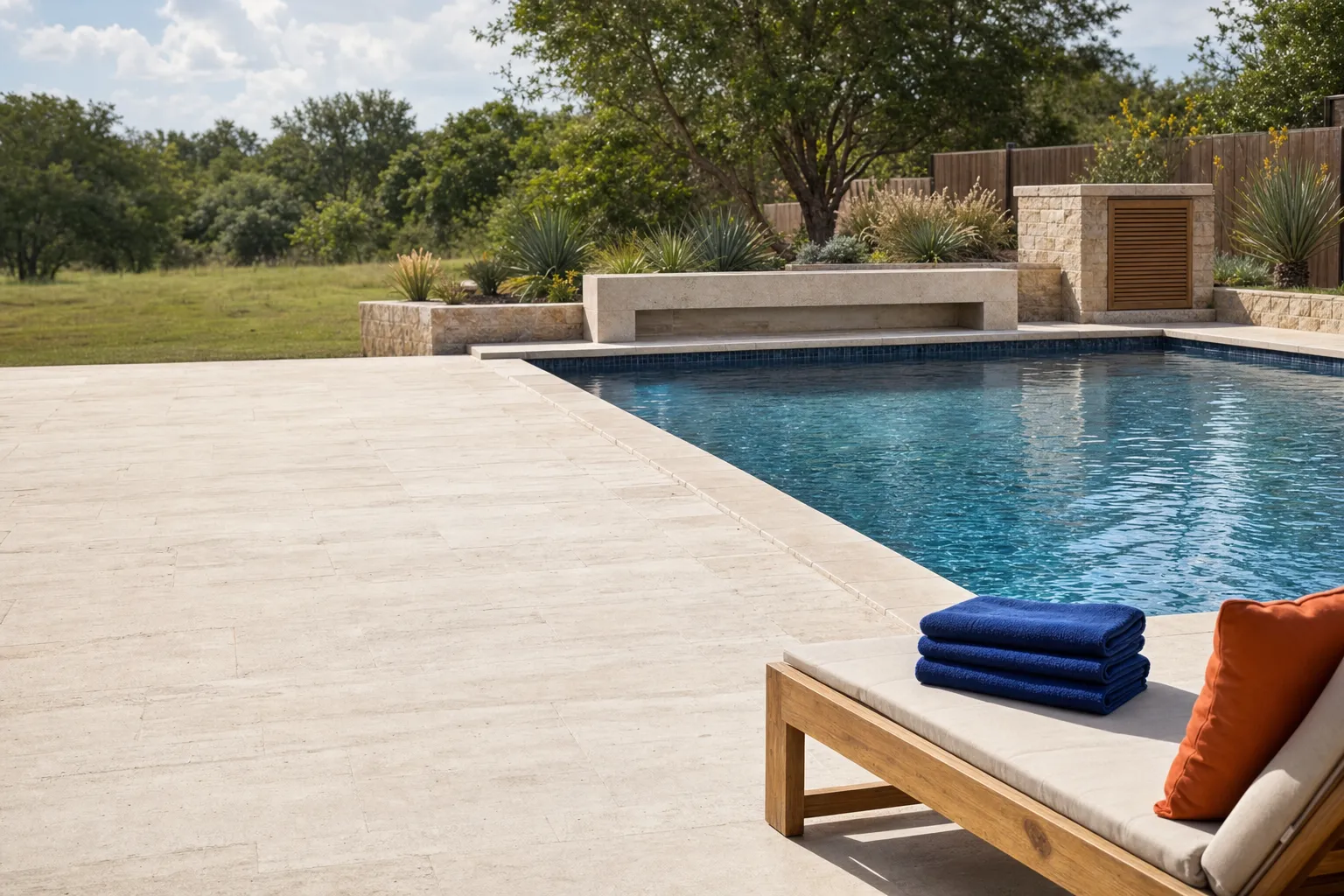
Good water feature work blends proper hydraulics, durable materials and thoughtful placement so the feature looks intentional, operates reliably and fits your outdoor space. At Petri Pools we design water features for pool remodels in Providence, Texas that meet those standards while matching a homeowner s lifestyle and the local climate.
What is a water feature in a pool remodel
A water feature is any permanent addition that moves, shapes or displays water as part of the pool environment. Common types include fountains, sheer descents, spillways, bubblers, scuppers and vanishing edge overflows. In a remodel a water feature can be integrated into the pool shell, added to a raised spa, tied into a retaining wall, or placed as a freestanding element in the deck or landscape.
When we add a water feature as part of a pool remodeling project we consider structure, equipment, access, water chemistry and how the feature will be used year round.
Why a well executed water feature matters in Providence Texas
Local climate and lifestyle shape what works. Providence and the greater Dallas Fort Worth area see hot summers, occasional storms and variable water chemistry from pools that are outdoor most of the year. A water feature that looks good on day one can become noisy, costly to run or vulnerable to staining if those factors are not addressed.
We approach water features with three local priorities in mind: longevity under sun and heat, ease of maintenance for busy homeowners, and design that fits typical Providence lot sizes and landscape palettes. Our experience since 2000 and more than 200 online reviews give us a practical view of what holds up in this region.
Key concepts to understand before you choose a water feature
- Scale and proportion. The feature should match pool size and yard scale so it reads as part of the space, not an add on.
- Hydraulics and flow rate. Pumps, pipe size and valves determine how a feature looks and how much it costs to operate.
- Finish and materials. Stone, tile, metal and plaster each weather differently and affect staining, maintenance and visual character.
- Integration with equipment. Filtration, heaters and automation must handle the extra flow or evaporative load created by the feature.
- Access for service. Valves and pumps should be reachable without tearing out finishes.
- Sound and wind behavior. A feature that sounds pleasant at one orientation may transmit noise into indoor spaces or blow water into seating areas depending on prevailing breezes.
Common water feature options and how they compare
| Type | Look and feel | Maintenance considerations |
|---|---|---|
| Sheer descent | Thin, glasslike sheet of water, modern look | Requires steady flow, clean nozzle, can show scale on tile |
| Spillway | Wide waterfall between pool levels, dramatic but controlled | Needs proper structural support and catch basins |
| Scuppers and bubblers | Subtle accents, good for shallow areas | Lower flow, easier to service, still sensitive to debris |
| Vanishing edge | High impact, connects pool visually to a view | Complex plumbing and weir design, higher construction cost |
Decision checklist for adding a water feature to a remodel
Before you commit
- Confirm the purpose: ambiance, playfulness, cooling, or view enhancement.
- Match the feature to pool scale and yard lines to avoid visual mismatch.
- Ask if the existing equipment pad can handle additional pumps or if upgrades are needed.
- Verify service access and place valves where a technician can reach them.
- Discuss material choices and staining risk with finishes and tile.
- Consider automation so timers and variable speed pumps control runtime efficiently.
How we plan and build water features
We follow a predictable process so results are durable and straightforward to maintain.
- Site review. We evaluate the yard, pool shell, views and equipment location to determine feasible options.
- Design and mockup. We produce sketches and 3D visuals where helpful so you can see scale and placement before construction.
- Hydraulic design. We size pumps, pipework and valves to deliver the desired effect while minimizing energy use.
- Material selection. We recommend finishes compatible with local water chemistry and the pool s intended use.
- Installation and commissioning. We install the feature, test flow, check for leaks, and set automation and chemical targets.
Throughout the project we factor in seasonal maintenance, winter care, and the need for occasional nozzle cleaning or tile attention.
Pro tip: In Providence a variable speed pump plus a programmable timer often saves more in operating cost than the feature adds in daily enjoyment. Ask about runtime presets and how flow adjustments change the look.
Common questions homeowners ask
Will a water feature increase my maintenance
Yes, most features add at least a small maintenance requirement. Thin sheet features need clean nozzles and tile attention. Vanishing edges require catch basin management. We design features to minimize extra work and advise on maintenance schedules you can follow or pass to a service plan.
How much does a good water feature add to a remodel timeline
Adding a simple scupper or bubbler typically adds a few days for plumbing and tiling. Complex elements such as vanishing edges or large spillways require structural modifications and can add several weeks. We include realistic timelines during planning so you can coordinate landscaping or decking work.
Can my existing equipment handle a water feature
Sometimes yes, sometimes no. We inspect your equipment pad and electrical capacity early in the design phase. When upgrades are needed we show options that balance performance and energy use, including variable speed pumps and automation.
Related services and topics
Water features often touch other parts of a remodel. For finish and staining questions see our pool finish materials page. For questions about how the feature ties into mechanical systems see our equipment integration topic. To read about broader outdoor design options, our outdoor living integration guide shows common approaches to seating, cooking and shade that complement water features.
Helpful resources and standards
Industry groups publish best practices that guide safe, durable installations. The Pool and Hot Tub Alliance publishes technical resources for builders and installers. For public health considerations related to recreational water, the Centers for Disease Control and Prevention offers guidelines on water quality and circulation.
We use those standards when sizing equipment and when recommending operational routines for features that affect turnover and water chemistry.
Key takeaway
A good water feature is the result of matched design, correct hydraulics, and materials chosen for the local climate. When those elements are planned together the feature becomes a lasting part of the pool experience rather than an added chore.
Frequently asked questions
How do water features affect pool chemistry
Features that aerate water, such as spillways or fountains, increase evaporation and can change chlorine demand and pH. We set circulation and sanitizer targets during commissioning to keep chemistry stable. For public health guidance, see the CDC s recreational water resources.
Can I add a water feature without changing pool coping or decking
Some small features can be added with minimal decking work, but many look best when integrated with coping or a raised bench. We evaluate aesthetic and structural needs before recommending a path forward.
What are the ongoing costs of running a water feature
Costs depend on pump size and runtime. Variable speed pumps and automation reduce operating costs. We estimate energy use during planning so you know long term operating implications.
Learn more and see examples
Check our Providence, Texas project notes and gallery to see water features we ve completed in the area and to read customer reviews. You can also explore our water features topic and our pool remodeling service to learn how a feature fits into a full remodel.