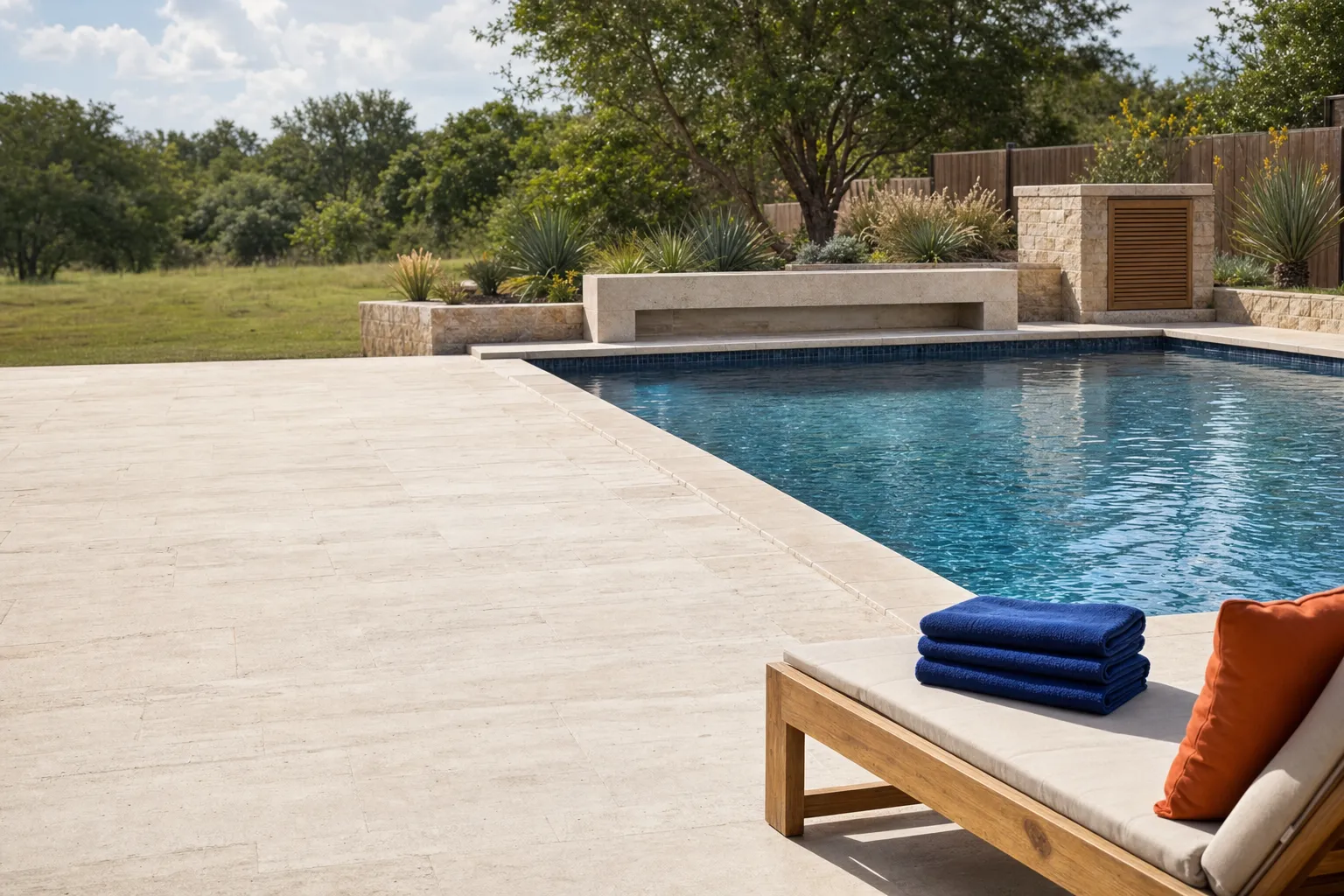
Short answer: common plaster finishes are traditional white plaster, colored or tinted plaster, quartz blends, pebble aggregate finishes, and exposed aggregate or glass bead finishes, and each balances appearance, texture and longevity differently. We recommend quartz or pebble finishes for Carrollton area pools when you want longer wear and lower maintenance, and traditional white plaster when you prefer a smooth, bright surface and are prepared for more frequent refinishing.
How we think about plaster finishes
At Petri Pools we choose a finish by weighing three things: the look you want, how long you want it to last, and how much maintenance you will accept. Plaster is the thin wearing surface over the pool shell. It affects color, texture, resistance to stains and etching, and how the water looks. Your local climate in Carrollton and the Dallas Fort Worth area, water chemistry, and how the pool is used also change which finish is the practical choice.
Below we describe the common finish types, how they behave over time, and the tradeoffs you should consider.
Plaster finish types explained
Traditional white plaster
What it is: A cement based mix usually finished smooth and bright. The classic plaster surface is the pure white finish many homeowners picture.
- Appearance: Bright, smooth, reflective, shows blue water color.
- Texture: Smooth underfoot, but can become slightly rough as sand or calcite particles appear.
- Durability: Shorter lifespan than aggregate finishes. Surface erosion and discoloration are common over time.
- When to pick it: When you want a clean bright look and are ready to schedule resurfacing more often.
Colored or tinted plaster
What it is: Same basic material as white plaster with mineral tints added to shift the tone. Tints range from soft beige to light gray.
- Appearance: Softer color palette, hides minor imperfections better than white plaster.
- Durability: Similar to white plaster, tint does not stop normal wear and erosion.
- Considerations: Color choice affects perceived water color and skintone reflection.
Quartz finishes
What it is: A blend of cement and graded quartz aggregate. Quartz particles add grit and mineral content to the surface.
- Appearance: Uniform, slightly textured, available in multiple color blends to soften water color.
- Durability: Better wear resistance than plain plaster, resists staining and etching longer.
- Maintenance: Easier to maintain balanced chemistry, less frequent touch ups.
- When it fits: Good middle ground for homeowners who want improved longevity without a heavy aggregate look.
Pebble and exposed aggregate finishes
What it is: Natural pebbles or manufactured aggregates are mixed into the mortar and exposed at the surface. Popular branded systems fall into this category.
- Appearance: Natural, textured, variegated stone look, often chosen for luxury or modern designs.
- Durability: Among the longest lasting plaster style finishes. Pebble finishes resist etching and abrasion better than plain plaster.
- Texture and comfort: Noticeably more texture underfoot. Choose a finer pebble for less abrasiveness.
- When to pick it: If durability and a natural stone look are priorities, and you accept the textured feel.
Glass bead and polished finishes
What it is: Small glass beads or fine aggregates are used to create a smooth reflective surface that resists staining.
- Appearance: Subtly sparkling, modern, can be made to look like a gem tone in certain lights.
- Durability: Good resistance to staining and chemical attack when properly installed and cured.
- Considerations: Glass beads increase cost and require careful installation and curing for best results.
How finish choice affects longevity and maintenance
Not all plaster finishes age the same. In our experience across Lewisville and the DFW area, plain white plaster often needs attention sooner than quartz or pebble surfaces. Quartz and pebble finishes typically extend the interval between major resurfacing by several years because the aggregate protects the cement matrix.
Key maintenance items that determine life span include how well water chemistry is controlled, how quickly surface discoloration or staining is addressed, and whether the original surface was properly cured and bonded to the shell.
Local conditions that matter in Carrollton and the Dallas Fort Worth area
Our region has hard water in many areas, and seasonal temperature swings that affect water chemistry and plaster curing. Hard water can promote scaling and staining on softer plasters. Strong sunlight and heat accelerate chemical reactions in the water, so finishes that tolerate minor chemistry swings stand up better here.
We evaluate the pool location, surrounding landscaping, and typical use before recommending a finish. For homes near heavy tree cover we recommend finishes that hide organic staining more easily.
Pro tip: If you swim year round or host frequent pools parties, select a quartz or pebble finish for longer wear and less surface maintenance.
Project considerations and what good workmanship looks like
Choosing the material is only part of the outcome. Surface preparation, mixing, application method, and curing determine performance.
- Surface preparation. Old plaster removal, concrete repairs, and proper bonding between shell and new plaster are essential. See our page on surface preparation for details.
- Material selection. Choose the aggregate grade and color with real samples and mockups. We review options from standard quartz blends to pebble aggregates.
- Application and finish quality. Skilled troweling and light finishing avoid weak layers and pinholes.
- Curing and startup. Follow manufacturer curing windows and balanced fill procedures. Improper curing is a common source of early failure. Learn more on our plaster curing page.
We treat every pool like it is in our own backyard, and that means careful prep and follow through. For projects that include structural repairs or wide cracks we coordinate with our pool resurfacing specialists to ensure the shell is sound before plaster goes down.
Watch out: Cheap or rushed plaster work often shows early pitting, flaking or discoloration. A long lasting finish starts with stable substrate and strict quality control during application and curing.
How to choose the right finish for your project
Ask yourself these decision questions, and use them when you compare options and quotes.
- How important is a smooth, soft feel versus a natural textured look?
- Do you want a bright blue water color or a muted natural tone?
- How long do you expect the finish to last before resurfacing?
- How does your pool environment affect staining potential, like trees or pets?
- What is the typical water chemistry ownership profile for your household?
Quick checklist before you choose
- Inspect existing surface and shell for cracks and delamination
- Review local water hardness and fill water source
- Request material samples and close up photos of finished pools
- Confirm contractor will follow manufacturer curing recommendations
When a particular finish is a poor fit
We avoid recommending plain white plaster for pools that are rarely balanced chemically or that are in heavy tree cover. Very textured pebble finishes are not ideal for families with small children or for pools that aim for a smooth swim spa like feel. If you have a high use pool or commercial property consider quartz or exposed aggregate for the improved life span.
Key takeaway
Plaster finish choice is a tradeoff between appearance, texture and longevity. For Carrollton and the Dallas Fort Worth climate we often recommend quartz or pebble aggregate finishes because they resist wear and staining, while traditional white plaster remains a good option when a bright, smooth look is the top priority and the owner plans routine maintenance.
Related topics and services
Learn more about how finish choice fits into a full project on our pages about plaster durability, finish longevity, and Pool Plastering. If you are in Lewisville or nearby, our Lewisville location page has local project examples and neighborhood references.
Frequently asked questions
How long does each plaster finish last?
Life span varies by finish, water chemistry and use. Traditional white plaster typically needs resurfacing sooner than quartz and pebble finishes. Quartz blends and pebble aggregates commonly extend the time between major resurfacing. Exact timing depends on maintenance and environmental factors.
Will a pebble finish feel rough on bare feet?
Pebble finishes are textured. Finer pebbles give a more comfortable feel while larger aggregates are noticeably textured. Ask to walk on a sample before deciding.
Does finish color change how the water looks?
Yes. White and light tints make water appear bright blue. Natural stone and darker aggregates mute the water color toward teal or deep blue. Color choice also affects perceived depth and how skintones look in photos.
How important is curing for plaster performance?
Curing is critical. Proper curing stabilizes the new plaster and reduces early etching, scaling and staining. We follow manufacturer recommendations and controlled fill and startup practices to protect your finish.
Can we resurface only part of the pool?
Partial resurfacing is possible in limited situations, but seams and color matching are difficult. We evaluate each pool and advise whether a spot repair is practical or a full resurfacing will give a more consistent result.
Learn more and see local examples
Check Petri Pools on Google to read customer reviews and get directions, and explore our related pages about finishes and resurfacing to compare options for your project.