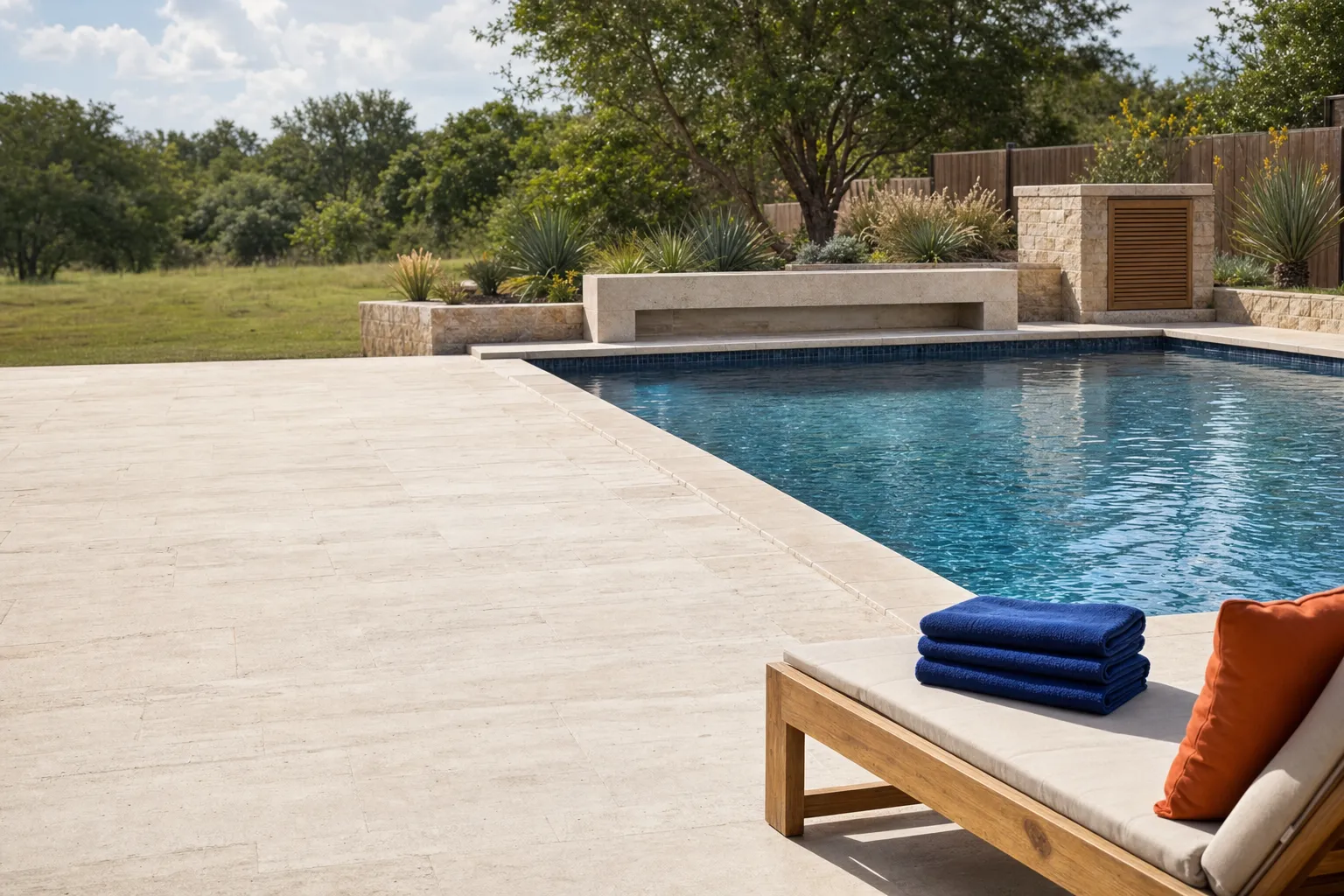
We recommend choosing a plaster finish color based on how you want the water to look, how much sunlight the pool gets, and how much maintenance you are willing to do. In Old Town Lewisville, finish color also needs to fit local architecture, landscape materials and the way pools age under Texas sun.
How plaster color changes water color and mood
The plaster color under the water is a major factor in the pool s visible color. Light colored plaster, like white or pale quartz, reflects more light and gives the water a bright blue or turquoise look. Darker finishes, such as pebbled or tinted plaster, pull more light out of the water and create deeper blue, lagoon or even green tones.
Besides color, texture matters. Polished white plaster produces a crisp, modern blue. Aggregate blends with small pebbles make the surface appear richer and slightly muted. We explain common families below and when they make sense for Old Town Lewisville homes.
Common finish color families and what to expect
White and very light finishes
These finishes deliver the classic bright blue pool we all picture. They show small imperfections and stains more easily, and they reflect heat so pools feel cooler in direct sun. Choose this family when you want a clean, contemporary look and are prepared for occasional spot cleaning.
Pastel and soft blues
Soft blues and aqua tints keep the bright feel while hiding minor discoloration better than pure white. They pair well with light stone decks and Mediterranean or coastal styles often found around Lewisville neighborhoods.
Neutral beige and sand tones
Sand and tan finishes make water look warmer and more natural. They are forgiving of mineral staining and match limestone coping and muted landscape palettes. Expect a less saturated blue, which some homeowners prefer for a calm, natural appearance.
Dark blues and teal
Darker blue or teal plaster creates a dramatic, deep water appearance. These finishes hide stains and minor wear better, but they absorb more heat and can make solar heating slightly more effective. Dark finishes are a common choice for contemporary designs or for pools where the goal is a dramatic evening look under lighting.
Pebble and aggregate blends
Pebble finishes mix small stones, quartz and pigments to produce texture and color variation. They are durable and mask imperfections. Aggregates come in many tones, from cool to warm, and often change subtly as lighting shifts through the day.
How color affects heat, maintenance and longevity
Color affects not only appearance, but also how the pool behaves in the Texas climate.
- Heat. Darker finishes absorb more solar heat, raising water temperature slightly on sunny days. That can be a benefit in shoulder seasons, and a factor to consider in mid summer.
- Stains and mineral buildup. Light finishes show mineral stains and organic marks more clearly. If you have hard well water or high mineral content, choosing a slightly darker or aggregate finish reduces visible staining.
- Fading and color stability. All plaster pigments fade slowly over years from UV exposure and chemical balance. Aggregate mixes are generally more forgiving visually as they use natural stone that weathers evenly.
Petri Pools note: we consider water source, shade patterns, and your tolerance for maintenance before recommending a finish. We also factor in project goals like ease of cleaning and desired long term appearance.
Design and neighborhood context for Old Town Lewisville
Old Town Lewisville has a mix of historic brick, light stone, and mature shade trees. That context suggests finishes that coordinate with warm brick and neutral paving, while handling seasonal shade and nearby pollen.
For historic or traditional exteriors, sand and soft blue finishes blend with brick patios and mature live oak canopies. For modern infill or contemporary remodels, polished white or deeper blue pebbled finishes make a clean statement under LED lighting.
We often review nearby materials, like coping stone and decking, before finalizing a color. If you want to see finished examples, learn how we approach color choices in our Finish Color Choices guide and compare finish materials on our Plaster Finish Types page.
See examples from completed work and typical neighborhood applications on our Old Town Lewisville project page.
How we help homeowners choose the right finish
We follow a simple, practical process so color choices match long term expectations.
- Discuss your vision. We start with style goals, how you plan to use the pool, and what materials you plan around.
- Assess the site. We evaluate shade, sun exposure, water chemistry history, and decking or coping colors on site in Old Town Lewisville.
- Show real samples. We provide small, cured sample patches so you can see the finish in morning and late afternoon light.
- Review maintenance tradeoffs. We explain how color affects cleaning frequency, stain visibility and how finishes age.
- Finalize the choice. Once you approve a sample, we schedule plastering through our Pool Plastering service and manage the work to our quality standards.
Practical tips before you pick a color
Quick checklist
- Observe sample patches at different times of day, not just at the showroom.
- Match or intentionally contrast the finish with coping and decking materials.
- Consider darker tones if your water is shaded for much of the day.
- Ask about aggregate if durability and stain resistance are priorities.
- Factor in pool lighting, since LED color will change the apparent water tone at night.
Pro tip: Bring a photo of your backyard and a swatch of your decking or roof when we review samples. That makes it easier to visualize the final look.
What good looks like and common misconceptions
Good means the finish meets your aesthetic goals and performs in the local climate. A low maintenance finish is not always the lightest one. Expect gradual, even patina rather than sudden color loss. Proper water balance, routine brushing and sensible chemistry reduce problems regardless of finish.
One common misconception is that white plaster stays perfectly white. In practice, all plaster develops a slight patina. The question is whether that patina matches your expectations and lifestyle. We help you set realistic expectations before any work starts.
Key takeaway
Finish color defines how your pool will look, feel and age. Choose color with an eye to sunlight, surrounding materials and maintenance, and use sample patches to confirm your choice in real light. For homeowners in Old Town Lewisville, we balance neighborhood character, shade patterns and long term appearance when recommending plaster color.
Frequently asked questions
Will a darker finish make my pool water green?
No. A darker finish makes the water appear deeper blue or teal. Water turns green mainly from algae or dissolved metals. Proper water treatment and routine care prevent that regardless of finish color.
How long do plaster colors last before they need replacement?
Plaster colors fade gradually over many years. Wear depends on pool use, chemistry, and surface type. Aggregate finishes often show wear less noticeably than plain white plaster. For information on longevity, see our Finish Longevity topic.
Can we change the plaster color without a full replaster?
Changing plaster color requires resurfacing. You cannot reliably tint an existing plaster in place. If you are considering a color change, our Pool Plastering page explains the process and typical timelines.
Does finish color affect how often I need to brush or balance chemicals?
Color does not change the chemistry needs. Darker finishes may hide minor blemishes, but regular brushing and correct chemical balance are essential for any finish.
Learn more and see examples
Check our Finish Color Choices guide to review samples and technical notes. View our Pool Plastering service details for process and timelines. See completed projects and how finishes look in Old Town Lewisville by visiting the Old Town Lewisville project page, then check our Google Business Profile for reviews and directions.