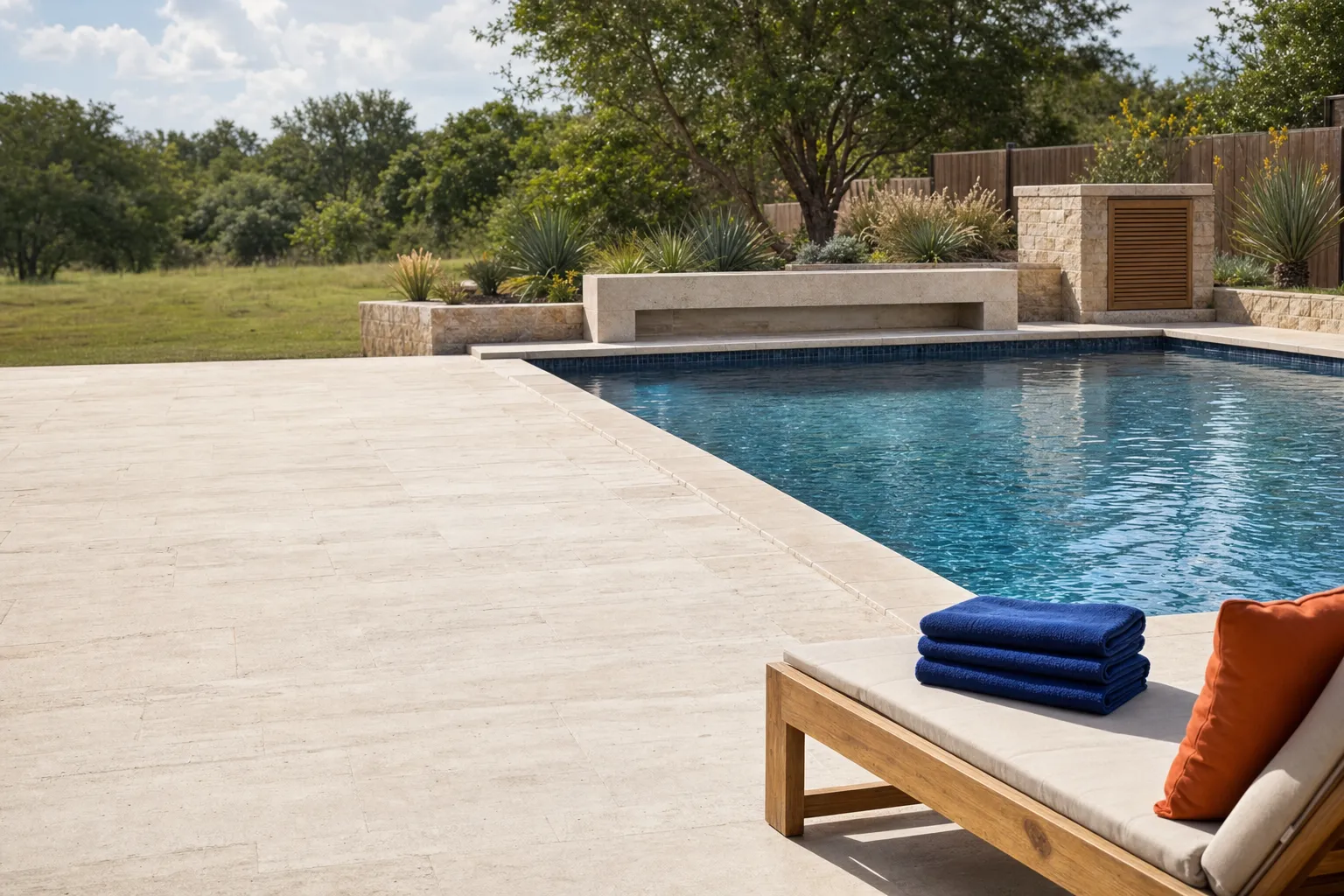
Ask whether the existing pool structure is sound, how the contractor will test and prepare the surface, which finish materials they recommend for your pool and why, how long curing and follow up maintenance will take, and what written terms cover workmanship and expected finish life. Those questions summarize the points that matter most before you start pool resurfacing.
What pool resurfacing means
Pool resurfacing replaces the visible interior finish of a swimming pool. That can mean replastering a concrete shell, installing an aggregate pebble finish, or redoing tile and trim. Resurfacing addresses worn, stained or leaking finishes and refreshes the look and performance of a pool without changing its footprint or major structure.
We handle resurfacing as one part of a larger renovation scope at Petri Pools, and we pair finish selection with practical issues like substrate condition, equipment integration and long term maintenance.
Why these questions matter locally
Dallas Fort Worth weather and local ground conditions affect finishes differently than other regions. Heat, daily temperature swings, water chemistry swings and seasonal use all influence how a finish looks and how long it lasts. Asking the right questions helps you avoid delays, unexpected repairs and early wear in Carrollton, Lewisville or neighboring neighborhoods.
Permits and public health rules may apply to commercial or community pools, and local building officials or county health departments sometimes require specific drain covers, bonding or records. We follow regional practice and refer to local guidance when it applies. For public or commercial pools, check the Texas Department of State Health Services for rules that may affect resurfacing scope and timing, especially for drain and safety compliance.
For background on how pool construction and finishes fit into overall pool work, see the general definition of pool construction on Wikipedia to understand common industry terms and stages.
Key concepts to understand before resurfacing
- Substrate soundness. A finish only lasts as long as the shell beneath it. Concrete cracking, delamination or steel corrosion under the finish must be identified before resurfacing.
- Surface preparation. Mechanical grinding, acid wash or shot blasting are common preparation methods. The chosen method affects bonding and finish longevity.
- Moisture and hydrostatic testing. Trapped moisture or a high water table can cause new finishes to fail if not handled correctly.
- Finish choices and trade offs. Plaster, quartz, aggregate pebble and tiles differ in texture, color options and maintenance needs. Each works better for different lifestyles and pool uses.
- Curing and return to service. New plaster or aggregate needs a defined curing period and controlled water chemistry before normal use.
- Equipment and integration. Resurfacing is a good time to evaluate pumps, heaters, filters, and automation so the whole system supports the new finish.
- Maintenance expectations. Ask what routine care the finish needs to meet manufacturer recommendations and local water conditions.
Checklist of questions to ask a contractor
What to cover with any resurfacing estimate
- What is the documented condition of the shell and substrate, and what tests will you perform to confirm it?
- How will you prepare the surface and which preparation method do you recommend for our pool?
- Which finish materials do you offer, and why do you recommend a specific option for our pool and our neighborhood climate?
- How do you control moisture and hydrostatic pressure for pools with groundwater concerns?
- How long is the curing period before we can safely use the pool, and what water chemistry steps are required during that time?
- Will resurfacing require equipment removal, tile replacement, or other trades, and who coordinates that work?
- Do you provide references and photos of recent similar projects in the Dallas Fort Worth area?
- What are the written workmanship terms and post job follow up procedures?
- Which permits or municipal notifications are required, and will you handle them or advise us?
- How will you protect surrounding patios, landscaping and equipment during the work?
Comparison of common pool finish types
| Finish type | Look and texture | Maintenance notes |
|---|---|---|
| Plaster | Smooth, classic look available in white or tinted colors | Requires balanced water chemistry; repairs are straightforward; attractive for a clean, bright appearance |
| Aggregate pebble | Textured surface with natural stone appearance and color variety | More durable against wear and staining; slightly rougher feel underfoot and may show less etching over time |
| Quartz/plaster blend | Slightly textured, consistent color with fine sparkle options | Good durability and color retention when maintained; less prone to early discoloration |
| Tile | Highly customizable accents or full tiled interiors | Low staining on tiled areas; grout maintenance and occasional regrouting may be required |
How we evaluate your pool before recommending resurfacing
We start with a visual inspection and detailed notes on finish wear patterns, cracks, staining and equipment condition. That helps us determine whether the issue is only cosmetic or whether a deeper repair is needed. We use noninvasive moisture tests and, when indicated, core samples or sounding to check bond and thickness. If your pool shows movement, recurring leaks, or large vertical cracks, the scope changes from resurfacing only to structural repair or renovation.
- Inspection and documentation. We photograph, measure and map visible defects and test water chemistry history when available.
- Diagnostic testing. Moisture readings, sounding and targeted cores when the visual check suggests deeper problems.
- Recommendation letter. A clear scope that separates necessary repairs from optional upgrades, and that names the finish material we recommend and why.
- Timeline and coordination. Outline of surface prep, removal of equipment if needed, finish application, curing, and a post cure test before final handover.
Pro tip: If you are planning other landscape or deck changes, coordinate them so the pool finish and surrounding materials are completed in the same window. That reduces the chance of damage to a fresh finish and can simplify scheduling.
Common objections and how to evaluate answers
Homeowners often hear estimates that promise faster timelines or lower initial costs. Ask what shortcuts, if any, would be taken to meet aggressive timelines. Good answers explain how prep and curing time are non negotiable for long term performance. If a contractor avoids tests or documentation, consider that a red flag.
Watch out: Skipping proper surface prep or rushing curing is the most frequent cause of early finish failure. Accepting a lower price that removes testing or prep will likely cost more down the road.
Related services that commonly come with resurfacing
Resurfacing is often bundled or coordinated with other work to ensure the pool is complete and reliable when returned to service. Common related services include:
- Pool Plastering for full interior plaster replacements. See our Pool Plastering service page for details on process and options.
- Pool Remodeling and renovation if you want to change pool features, tile bands or shape.
- Equipment checks and upgrades, such as pumps, filters and automation to make sure new finish is supported by correct circulation and chemistry.
When we recommend combined work, we describe the trade offs and sequencing so you understand why certain items make sense to do together.
Related locations and service area notes
We are based in Lewisville and serve homeowners and properties across the Dallas Fort Worth region. If your pool is in Carrollton or nearby communities, regional climate and local permits can affect timing and finish selection. For more about where we work, see our Locations page which lists service areas and local considerations.
Because we treat every project as if it were in our own backyard, our crews account for local conditions like seasonal temperature swings and common water chemistry patterns in this part of Texas.
Helpful resources and industry guidance
Standards and guidance from industry groups help set expectations for materials and procedures. The Pool and Hot Tub Alliance publishes manufacturer guidance and industry recommended practices that are useful when comparing finish systems and application methods. For local regulatory requirements for public or commercial pools, consult the Texas Department of State Health Services guidance on public pool rules. For general background about how pool construction and finishes fit into larger projects, see the swimming pool construction overview on Wikipedia.
Common questions we hear
We answer the most frequent questions below in more detail, so you can quote short answers when you compare bids.
How long will the pool be out of service?
Resurfacing alone usually keeps a pool out of service for the surface prep, application and curing period. Exact timing depends on the finish type and curing protocol. We include a realistic timeline in every recommendation and explain the water chemistry steps required before reentry.
Will resurfacing fix leaks?
Minor, surface level leaks from hairline cracks or pinholes can be addressed as part of a resurfacing scope. Significant structural leaks caused by shell movement or failing pool shell reinforcement require repair before a new finish is applied. Our inspection separates cosmetic leaks from structural issues so you know what must be repaired first.
Which finish lasts longest?
Finish longevity depends on the material, surface prep, water chemistry and how well the pool is maintained. Aggregate and quartz blends tend to resist visible wear and staining better than basic plaster in many cases, but no finish is maintenance free. We will explain the trade offs for durability, texture and look for your specific pool.
Decision guide and next steps
When you have comparable bids, use this quick decision checklist to compare apples to apples:
Bid comparison checklist
- Does the scope clearly separate mandatory repairs from optional upgrades?
- Are preparation methods and tests described and priced transparently?
- Is the recommended finish matched to your pool use and local water conditions?
- Are timelines and curing procedures written into the proposal?
- Does the contractor provide references and recent project photos for similar jobs?
- Are permit responsibilities and any required code work explained?
If a proposal leaves answers out, ask the contractor to add them in writing so you can compare on the same basis. We provide a detailed recommendation and timeline for every resurfacing project we quote.
Key takeaway
Good resurfacing starts with a clear diagnosis, honest testing, and a finish choice that matches your pool and your local conditions. Ask specific questions about substrate soundness, surface preparation, moisture control, finish trade offs and curing. Those answers protect your investment and set realistic expectations for finish life and maintenance.
Frequently asked questions
What tests should a contractor perform before resurfacing?
A contractor should perform a detailed visual inspection, sounding for delamination, and moisture or hydrostatic testing when groundwater is suspected. Core samples are appropriate when the visual check indicates possible structural issues. These diagnostics help determine if resurfacing alone is appropriate or if deeper repairs are needed.
How long after resurfacing can we use the pool?
Return to service depends on the finish and the curing protocol. Plaster and aggregate finishes require controlled initial fill and a period of balanced chemistry before regular use. Your contractor should provide the specific steps and a timeline as part of the project plan.
Do I need permits for pool resurfacing?
Permitting depends on local rules and whether the work includes structural changes, electrical, or public pool safety devices. For public and commercial pools, Texas Department of State Health Services guidance may apply. Ask your contractor which permits are necessary and who will handle them.
How do I choose between plaster and pebble finishes?
Choose based on texture preference, desired look, and how you maintain water chemistry. Pebble and quartz blends are generally more resistant to staining and etching, while plaster provides a classic, smooth appearance. We will review the pros and cons for your pool during the inspection.
Learn more and check our local work
Read customer reviews and get directions from our Google Business Profile, and browse related pages to learn more about finishes and project planning on our site. See our topic page on finish longevity for deeper detail and our Pool Resurfacing service page for process information. For service area details, view our Locations page.