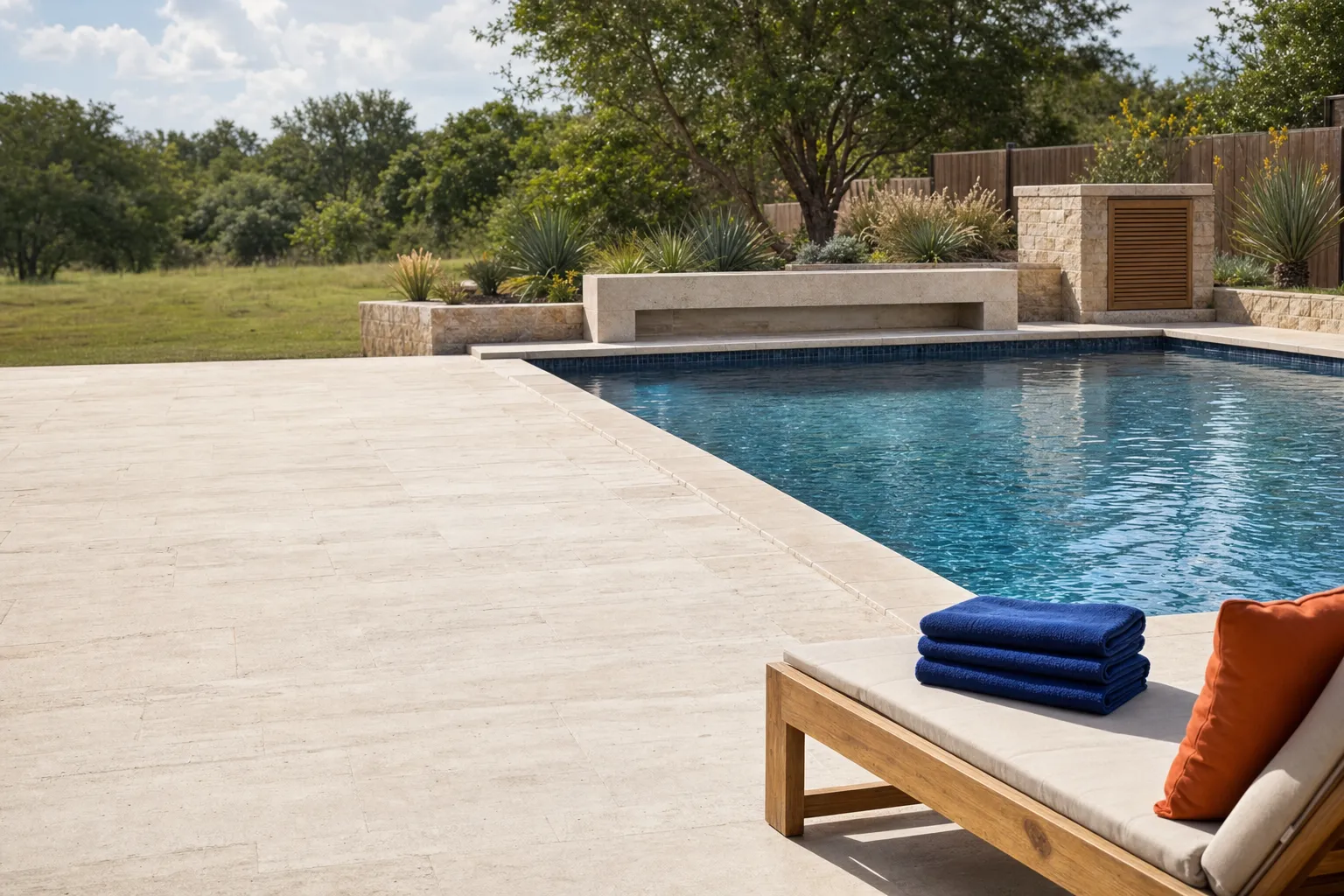
Surface preparation is the main reason pool resurfacing takes longer and costs more than many homeowners expect. In plain terms, resurfacing is not just laying down new plaster or finish, it is restoring a clean, sound surface that the new material can bond to for years of service.
Why surface preparation matters for resurfacing success
We answer this early because it is the single most important point to get right: if the substrate is not properly prepared, a new finish can fail quickly, leading to peeling, staining or premature wear. Proper preparation controls adhesion, ensures even water chemistry during curing, prevents visible blemishes and uncovers structural or equipment problems that must be fixed first.
On projects in Hickory Creek and throughout the Dallas Fort Worth area we treat every remodel as if the project were in our own backyard. That means we look beyond aesthetics to the pool shell, plumbing interfaces, drains and coping details before any new material goes down.
Common hidden issues that increase complexity
1. Substrate damage and delamination
Old plaster and concrete can hide hairline delamination, voids, or pockets of soft material. These areas must be chipped out and repaired. If we miss them, the new finish may not bond uniformly.
2. Failed or incompatible finishes
Some existing finishes, like certain pebbles or aggregates, require special profiling or complete removal rather than simply covering over. Compatibility testing tells us which approach will last.
3. Embedded contaminants and staining
Scale, oils from pool covers, rust stains and mineral deposits can remain trapped in pores. They need chemical cleaning or mechanical removal to prevent discoloration of the new surface.
4. Plumbing, drains and skimmers
Drain assemblies, main drains, skimmer throat dimensions and return fittings can affect how we prep and patch the shell. Replacing or correcting these details is often necessary before resurfacing.
5. Cracks and structural movement
Hairline cracks or movement in the shell suggest structural work or crack injection before resurfacing. Cosmetic resurfacing alone will not fix those problems.
6. Weather and curing windows
In North Texas, temperature and humidity matter for curing. Some finishes require stable temperatures and low rain risk during a multi day cure that affects scheduling and sequencing.
The surface preparation process we follow
Below we outline the practical steps we take on typical pool resurfacing projects. This sequence is how we reduce surprises and deliver a durable finish.
- Initial inspection and documentation. We inspect the shell, make photographic notes, test waterline materials and catalog visible and likely hidden defects. This step identifies what needs attention before budgeting and scheduling.
- Drain, fitting and equipment checks. We verify skimmer, main drain and return fitting condition, and check integration points with heaters, automation and in pool lighting so resurfacing does not interfere with equipment function.
- Preclean and chemical treatment. We remove oils, scale and biological growth. That can include acid washing, alkali cleaning, or manufacturer recommended cleaners depending on the finish in place.
- Mechanical profiling or removal. Where required, we grind, scarify or shotblast the surface to reach a uniform, sound substrate. In some cases complete removal of the existing finish is the right choice.
- Repair and patching. We address voids, cracks and delaminated areas with appropriate repair mortars and techniques, matching the movement and thermal properties of the shell.
- Bond and substrate testing. We perform adhesion tests on representative areas to confirm the substrate is ready. If a test fails we revisit cleaning, profiling or repairs.
- Final precoat and priming. For some finishes, a primer or bonding slurry is applied to promote adhesion and mitigate outgassing or substrate absorption during curing.
- Finish application and curing oversight. We apply the selected finish and manage the curing period with water chemistry control and environmental monitoring.
Checklist for homeowners before resurfacing starts
What we look for and what you can prepare
- Clear access to the pool and equipment pad for trucks and staging.
- Documentation of existing equipment models and known service history.
- Removal of loose items, furniture and planters near the pool.
- Discussion of finish color and texture choices, and the impact of each on maintenance and comfort.
- Review of electrical and lighting locations to avoid surprises during resurfacing.
Pro tip: Choosing a slightly lighter finish color reduces heat absorption and can make maintenance easier without changing the required surface prep steps.
Why testing and trade coordination add time and cost
Testing, such as pull off adhesion tests and chemical assays, takes time because results guide how we proceed. When tests show contamination or poor bond we bring in patching crews, concrete repair specialists or equipment vendors. That coordination is normal on complex renovations and protects your investment by ensuring the new surface performs as intended.
Watch out: Skipping substrate testing or accepting a quick cosmetic overlay increases the risk of early finish failure. If a contractor promises to resurface without inspecting or testing the shell, ask why the inspection is being skipped.
Common misconceptions homeowners have
- Misconception: Resurfacing is only cosmetic. Reality: Proper resurfacing corrects adhesion, addresses hidden damage and interfaces with plumbing and equipment.
- Misconception: One finish suits every pool. Reality: Not all finishes are compatible with every existing substrate or usage pattern. We discuss tradeoffs for longevity, maintenance and appearance.
- Misconception: Faster is better. Reality: Rushing steps like curing or bonding tests typically shortens the life of the finish.
How surface preparation affects finish options and longevity
Surface condition limits which finishes are appropriate. For example, a shell that needs aggressive patching may not be a good candidate for some thin micro toppings. Conversely, a well profiled, sound substrate expands your choices and helps the finish meet expected service life and appearance goals. For a deeper look at finishes, see our page about pool finish materials at Pool Finish Materials.
When to expect additional trades or remediation
Some issues require specialists. We will recommend these resources when needed, and coordinate the work:
- Concrete repair contractors for significant shell spalling or structural cracks.
- Plumbing contractors when drains, returns or equipment connections need replacement.
- Electricians for light or equipment wiring that must be moved or updated before resurfacing.
We explain these trade needs up front when we prepare the project plan and schedule.
Who should do this work
Resurfacing that involves surface preparation, structural repairs or equipment integration is specialized work. We have practiced these steps on renovation projects across Lewisville and the Dallas Fort Worth area since 2000, and our team manages the sequence so the new finish bonds and cures as intended. Attempting to rush or DIY the prep can lead to early failure.
Pros
- Proper prep extends finish life.
- Early detection of structural or equipment issues reduces surprise costs later.
- Better finished appearance and fewer maintenance headaches.
Cons
- Additional time for testing and repairs.
- Potential need for other trades before application.
- Higher upfront cost for a durable result versus a cosmetic overlay.
Frequently asked questions
How long does surface preparation add to a resurfacing project?
It depends on what we find. Basic cleaning and profiling may add a few days. If repairs, trade work or extended curing are needed, the prep phase can add one to two weeks to the schedule. We include a realistic timeline in our project plan so you know what to expect.
Can you resurface over existing plaster without removing it?
Sometimes we can, but only after tests confirm the existing material is sound, uncontaminated and compatible with the chosen finish. When tests fail, we remove and replace the existing finish for a more reliable outcome.
Will surface prep change the cost estimate?
Yes, it can. Preliminary estimates include allowances for common preparations. If testing uncovers additional repairs, we present options and updated pricing before proceeding.
How do weather and seasons affect surface preparation?
Temperature and humidity influence cleaning, profiling and especially curing. In North Texas we plan for temperature ranges and seasonal rain to protect the finish during its initial cure period.
What signs indicate a bad substrate?
Signs include loose or flaking finish, visible cracks that move, wide staining that does not respond to cleaning and areas that sound hollow when tapped. We investigate these signs during the inspection.
Do you test adhesion before applying a finish?
Yes. Adhesion testing on representative areas is a standard part of our prep process to confirm the chosen method will bond correctly.
Key takeaway
Surface preparation is where durable pool resurfacing begins. Hidden damage, contamination, plumbing and curing all affect cost and schedule. Addressing these elements up front is the difference between a finish that lasts and one that fails prematurely. For projects in Hickory Creek and across the Dallas Fort Worth area we handle the inspection, testing and coordination so the new surface performs as expected.
Related resources on our site
Learn more about the surface work that matters on our topic page about Surface Preparation. To review the pool resurfacing service we provide, see our Pool Resurfacing page. For information about areas we serve and nearby projects, visit our Locations page.
Find reviews and directions
To read customer reviews and get directions, check our Google Business Profile. If you want to learn more about related topics and services, explore the articles and service pages on our site.