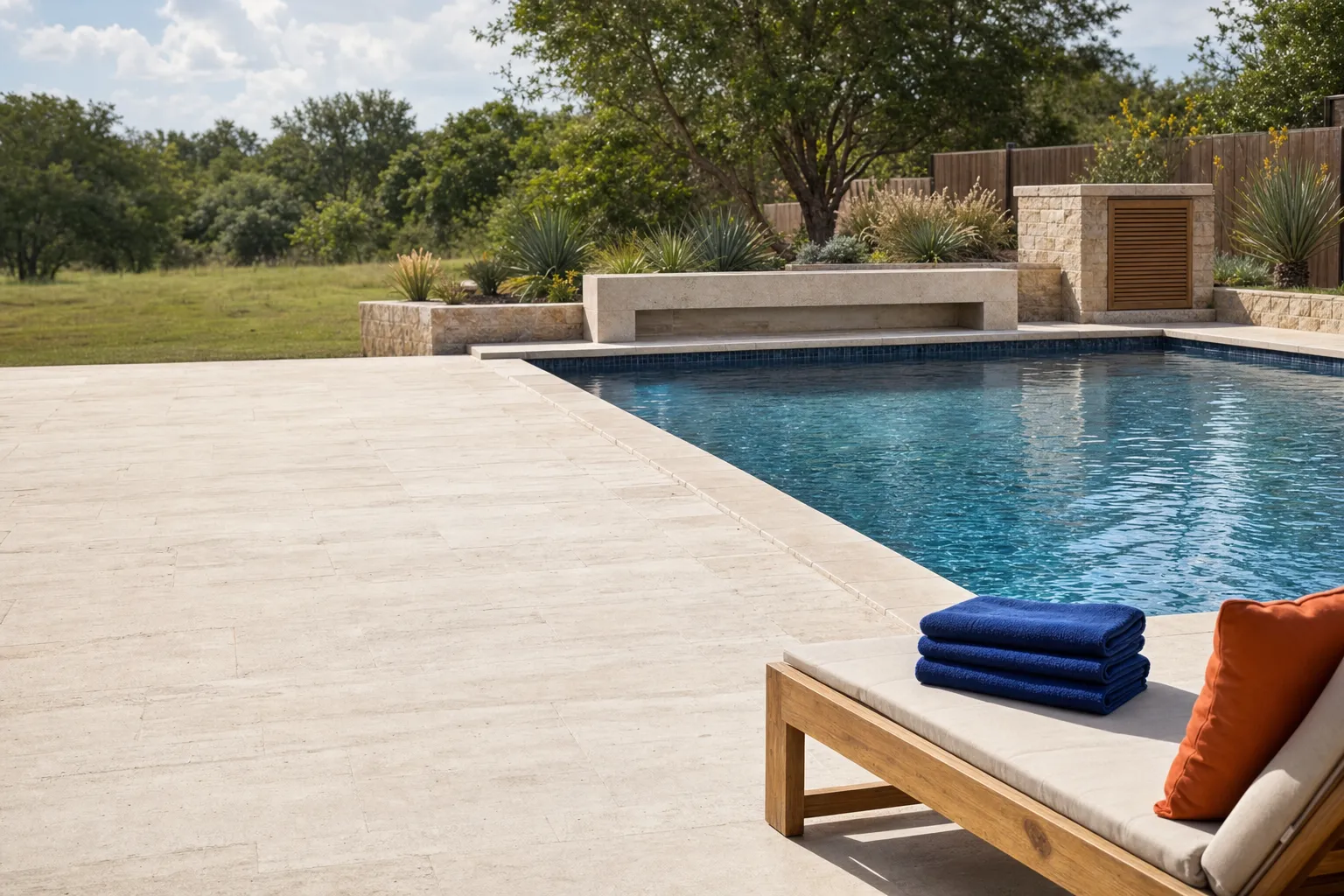
Pool coping is the finished edge that caps the pool shell and ties the waterline to the deck. The main coping options you will see in The Colony are precast concrete, natural stone like travertine, masonry pavers, tile, and poured or cantilevered concrete, and each choice affects appearance, slip resistance, repair needs and how we approach resurfacing.
What coping does and why it matters
Coping performs three practical jobs. It protects the pool shell from water intrusion and mechanical wear, it creates a transition between the pool and the deck, and it sets the visual edge of the pool. When we plan a resurfacing or remodeling project, coping determines details such as waterline tile placement, deck elevation, and the finish material we select for the basin.
For homeowners in The Colony and the wider Dallas Fort Worth area, climate and use matter. Mild winters reduce freeze risk, but sun exposure, pool chemicals and heavy foot traffic still influence material selection and maintenance schedules.
Common pool coping materials and what to expect
Precast concrete coping
Precast concrete coping is cast in forms, then delivered and set around the pool edge. It offers consistent profiles, bullnose edges for safety, and a wide range of colors and textures. Precast is durable and integrates well with concrete pool shells, which makes it a frequent choice when we do concrete pool resurfacing.
Natural stone coping
Natural stone, such as travertine, limestone or flagstone, gives a high end look and stays relatively cool under Texas sun. Stone varies in thickness, edge profile and slip resistance. Stone requires proper setting on a structural backing and periodic sealing to limit staining and efflorescence.
Tile coping
Tile coping runs along the waterline and can be combined with a tile band. Glass and ceramic tiles offer design flexibility and low water absorption, but they are brittle and can crack if the underlying structure moves. We coordinate tile with basin finishes to avoid clashing materials.
Paver or brick coping
Pavers and brick provide a coordinated look when the pool deck is pavered. They are easy to replace piecemeal, but small joints require good drainage and periodic releveling if the base settles.
Poured or cantilevered concrete coping
Cantilevered concrete coping is created by extending the deck slab over the bond beam and finishing the exposed edge. It works well with unified concrete decks and allows continuous textures, but control joints and a watertight bond beam are critical to long term performance.
How coping affects resurfacing and remodeling
Coping and basin finish are linked. When we resurface a pool, we assess coping for hidden damage, attachment quality and how the new basin finish will meet the waterline. Replacing or upgrading coping is often required if the existing pieces are cracked, loose, or set on failing mortar.
When resurfacing, consider these interactions
- Edge height. A thicker new finish can raise the waterline relative to existing coping, affecting overflow and aesthetics.
- Attachment. Tile and stone must be mechanically or mortared to a sound substrate to avoid future failure.
- Transition details. Coping profile determines whether water spills onto the deck, into a channel, or over a cantilevered lip.
Pros
- Precast concrete: consistent look, good durability, easy to source.
- Natural stone: premium appearance, stays cool, organic texture.
- Tile: precise lines and color control, easy to match waterline tile.
Cons
- Precast concrete: visible seams and potential color fade over time.
- Natural stone: higher upfront cost and requires sealing.
- Tile: vulnerable to settlement and impact damage.
How we help homeowners choose the right coping
We guide homeowners through selection by balancing style, budget and long term care. Our approach starts with an on site inspection of the existing pool structure and surrounding deck, followed by material samples and a discussion about maintenance expectations.
- Assess the existing structure. We inspect the bond beam, deck elevation and any signs of movement or previous repairs.
- Match style and use. Family pools, vacation homes and luxury builds have different comfort and aesthetic priorities.
- Review samples and mock ups. Seeing materials in place, under daylight, helps avoid surprises.
- Plan drainage and joints. We specify control joints and drainage paths that protect both coping and deck.
Checklist: what to confirm before you pick coping
Pre selection checklist
- Is the bond beam in good condition and free of cracks?
- Does the deck elevation allow for the desired coping profile?
- Will the material remain slip resistant when wet and when treated with pool chemicals?
- How visible are seams and color variations for natural stone?
- Is ongoing sealing or special cleaning required for the material?
- How does the coping connect to waterline tile and skimmers?
Pro tip: View coping materials at mid day when the sun is high. Color and surface temperature change with light and will affect how the pool looks and feels.