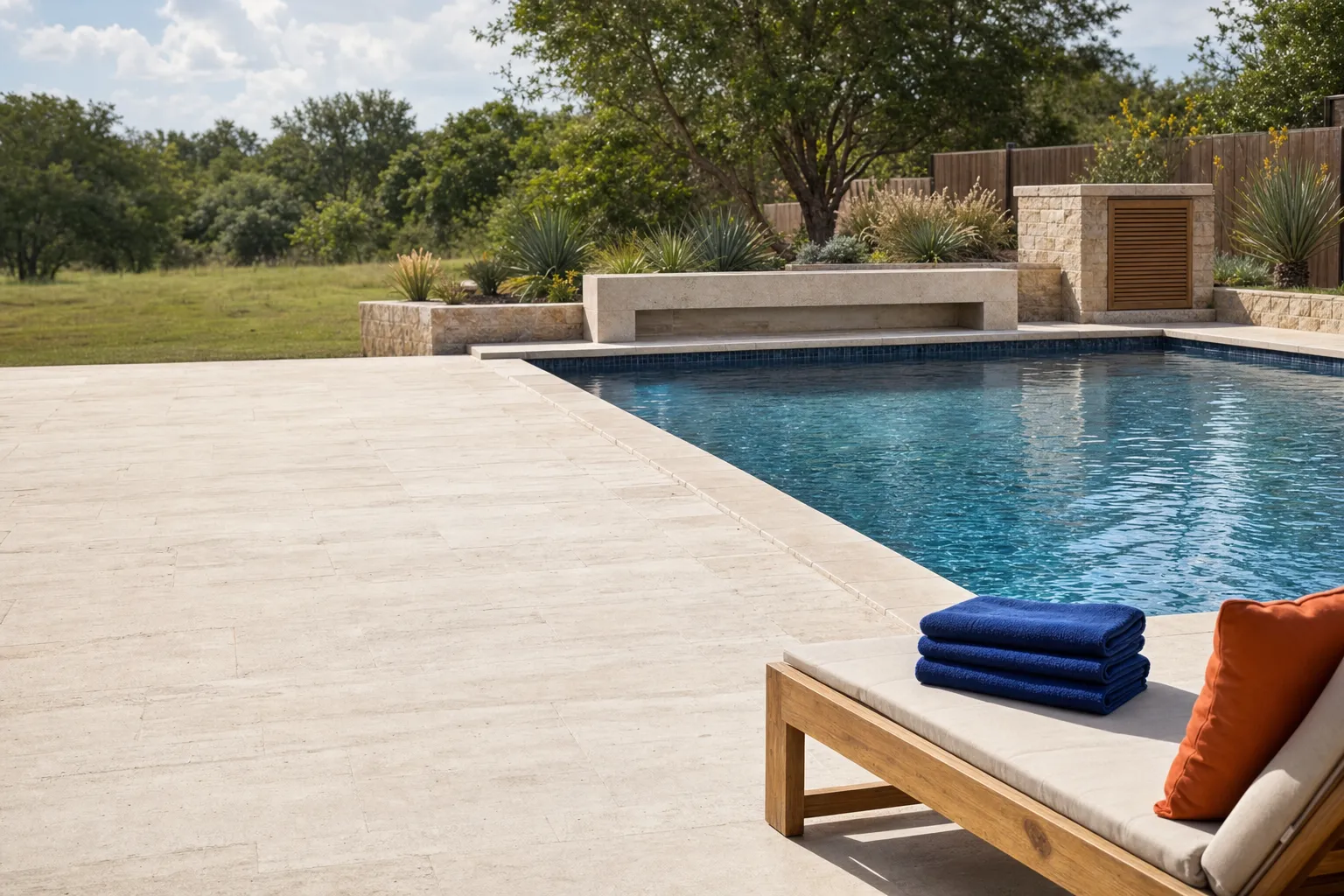
Pool finish materials shape the plastering process in three clear ways: they determine surface preparation, they change installation technique, and they affect long term maintenance. At Petri Pools we match the finish to the pool structure, water chemistry expectations and the owner s lifestyle so the plaster performs the way it should.
Why the finish matters right from the start
Choosing a finish is not just about color or texture. The finish is the visible layer of the pool and the layer that meets the water every day. Different finishes bond differently to existing concrete or plaster, call for different mixes and aggregates, and require different curing and maintenance routines. For any resurfacing or plastering project we always consider the finish first because it changes the prep, the timeline and the long term care plan.
For a deeper look at common finish types, see our topic page on Pool Finish Materials.
Common finish types and how they change plastering
White plaster and colored cementitious plaster
Traditional white plaster is a cement and marble sand mix. It is relatively smooth, affordable and reflects light well. When we apply plaster over shotcrete or gunite we prepare the surface to ensure a consistent bond. Cementitious plasters set via chemical hydration so surface cleanliness, moisture control and correct mix proportions are critical.
Pebble and exposed aggregate finishes
Pebble finishes use natural or manufactured stones in a cement matrix. They are harder wearing and more textured than plain plaster. Installing a pebble finish changes the plastering step where we broadcast aggregate into the wet cement or use a premixed pebble blend. The thickness, trowel technique and final fill pass differ from a smooth plaster job, and curing must protect the surface from rapid drying and staining.
Quartz and polymer modified finishes
Quartz finishes are cement based with colorfast quartz aggregate. They combine durability with a low maintenance surface. Polymer modified finishes use additives that improve adhesion and flexibility. Both choices affect the plaster mix design and how we prepare older surfaces, especially if the existing finish is failing or efflorescing.
Tile and plaster transitions
Tile copings, waterlines and decorative accents require careful junctions with plaster. When we plan plastering around tile we account for movement joints, bond coat compatibility and the sequence of installation so the tile and plaster meet cleanly and remain watertight.
How finish choice changes surface preparation
Surface preparation is the step that most affects whether a plaster job lasts. For every finish we inspect for delamination, acid staining, spalling and structural cracks. The preparation tasks vary by finish:
- White plaster and quartz finishes need a clean, sound substrate with no loose material and correct surface profile.
- Pebble and aggregate finishes require more aggressive profiling to create mechanical keying for the stones.
- Polymer modified mixes need contaminants removed so the additives can bond properly.
We document the existing surface condition and recommend repairs before any new finish goes down. For projects in Lewisville, Farmers Branch and the wider Dallas Fort Worth area we also note local water chemistry and mineral content because that influences how we treat the substrate before plastering.
Installation steps where finish changes technique
- Assessment and repair. We locate cracks, hollow spots and old finish failures and schedule concrete repairs or crack routing before resurfacing.
- Profiling the surface. Shotblasting or diamond grinding is selected based on the finish to create the right texture for bonding.
- Mix and batching. The proportion of cement, sand, quartz or pebble is adjusted to the finish specification, and polymer additives are measured per manufacturer guidelines.
- Application technique. Trowel finish, broadcast aggregate or float methods are chosen for the finish. For pebble work the aggregate may be broadcast into wet cement then finished with a sealing pass.
- Curing and fill procedures. Curing regime and initial fill protocols differ. Some finishes require a controlled fill to avoid staining and to allow the plaster to reach designed strength.
Pro tip: Manufacturers set different moisture and curing windows for quartz and pebble blends. Following their timing preserves color and adhesion.
How finish choice affects lifespan and maintenance
Roughly speaking, smooth plaster shows wear sooner than pebble or quartz finishes, but smoother finishes are easier to clean of algae and debris. Pebble finishes are very durable against abrasion, but their texture holds more surface area and may need slightly different cleaning chemistry.
We plan maintenance recommendations based on finish and on the local conditions in Lewisville and Farmers Branch. That includes how to manage total alkalinity, calcium hardness and sanitizer choice so the finish does not etch or scale prematurely. For general guidance on pool water health the Centers for Disease Control provides useful recommendations on public and private pool sanitation and operation at https://www.cdc.gov/healthywater/swimming/index.html.
Signs a finish is affecting pool performance
Watch for these signs that the finish is failing or influencing pool function:
- Rapid staining or pitting after a resurfacing project.
- Cracking or small delaminated areas where the finish peels away.
- Persistent rough spots or increased chemical demand that cleaning cannot correct.
When these appear we inspect the bond, test water chemistry and review past maintenance records before recommending a resurfacing approach. Proper diagnosis avoids replacing a sound finish unnecessarily.
How local climate and water influence material choice
North Texas climate and local tap water mineral content affect how finishes age. Freeze cycles are uncommon here, but summer heat accelerates chemical reactions and can stress curing. High calcium in local water can increase scaling on some plaster mixes, so we factor local lab results into our finish recommendation.
For context on occupational standards and industry trends we follow labor and construction data from the U.S. Bureau of Labor Statistics, which helps inform realistic project timelines and labor planning for pool trades at https://www.bls.gov/ooh/construction-and-extraction/home.htm.
Watch out: Replastering over a failing aggregate or detached topping can trap moisture and cause rapid failure. Always verify full bond before applying a new finish.
Avoiding common finish mistakes
- Skipping profiling and directly applying a new finish over a glossy or contaminated surface.
- Using the wrong curing or fill procedure for the chosen finish.
- Mismatching tile and plaster movement joints which leads to future leaks.
We see these avoidable mistakes and correct them during our resurfacing and plastering projects so the new finish lasts and looks consistent.
How we decide between plaster options at Petri Pools
When we advise homeowners, HOAs and property managers we weigh three things: structural condition of the pool shell, desired appearance and future maintenance expectations. A quartz finish might be right for a low maintenance preference. A pebble finish may be best where extra durability is desired. For cosmetic budgets and bright reflective options we look to traditional plaster blends.
We are licensed and insured and have worked throughout Lewisville and the Dallas Fort Worth area since 2000. With more than 200 online reviews we document what will change with each finish and include that documentation in the project plan so you know what to expect.
Learn more about our resurfacing work on our Pool Resurfacing page and about our local service area on the Lewisville, Texas location page.
Checklist for choosing a pool finish before plastering
What we review with you
- Existing shell condition and documented repairs needed.
- Desired look and texture, including color samples and sample boards.
- Expected maintenance routine and willingness to follow manufacturer care.
- Local water test results and how they affect finish choice.
- Projected timeline and how finish selection changes the schedule.
Key takeaway
Your choice of finish directly changes how we prepare, apply and cure pool plaster. Selecting the right finish for your pool shell, local water and maintenance expectations ensures a longer lasting surface and a smoother plastering project.
Frequently asked questions
Which finish lasts the longest for a residential pool?
Pebble and well installed quartz finishes typically outlast plain white plaster because they are harder and more abrasion resistant. Longevity still depends on correct surface preparation, proper curing and balanced water chemistry.
Can we put new plaster over old plaster?
Sometimes, but only if the old plaster is sound and fully bonded to the shell. We inspect for delamination and test the substrate. If there are hollow areas or widespread failure we recommend removing the old finish or performing full repairs before applying new plaster.
How does finish choice change the project timeline?
Roughly, textured aggregate finishes add a day or two to application and require a more controlled curing period. Additional profiling or concrete repairs can extend the timeline. We map the full schedule in our project plan so you know key milestones.
Will a textured finish make the pool harder to clean?
Textured finishes can hold more dirt than smooth plaster, but modern quartz and pebble blends are formulated to be low maintenance. We explain maintenance steps specific to each finish so cleaning stays straightforward.
How much does local water chemistry matter?
Local water chemistry matters a lot. High calcium or unusual mineral content can increase scaling or staining risk. We always test water samples and consider those results when recommending a finish and a care plan.
Where can I learn more about finish options and care?
We keep detailed resources on common finish types and their care on our Pool Finish Materials topic page and on related pages about finish longevity and plaster durability.
Learn more and check our reviews
Read what customers say on our Google Business Profile and compare project photos to see finishes in real installations. For additional reading, see our topic page on Pool Finish Materials, our Pool Resurfacing service page and our Lewisville location information.