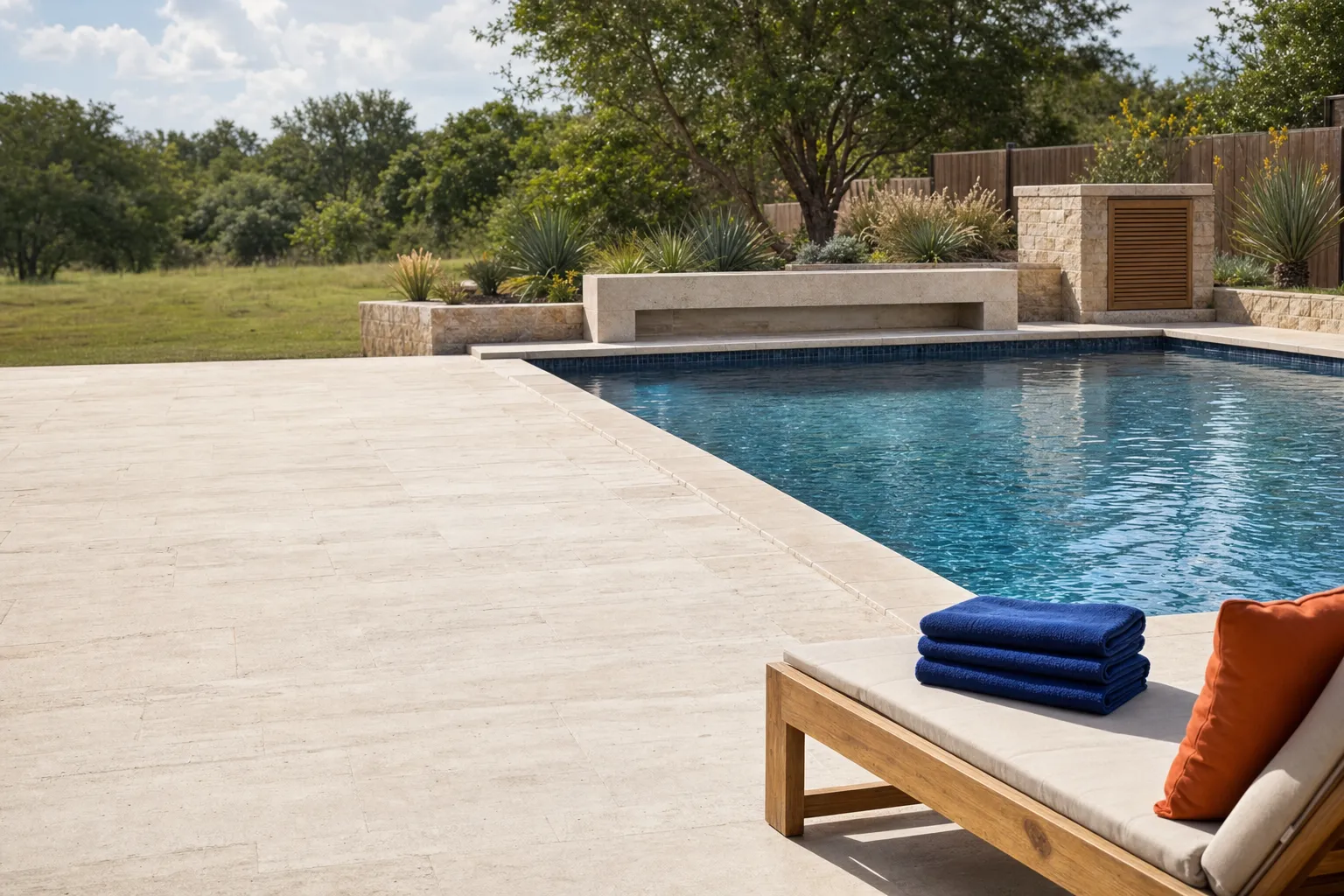
Reviewing a pool finish for longevity before we resurface it tells us what materials to use, how much surface preparation and repair will be required, and what you can reasonably expect from the new finish. In short, assessing finish longevity up front reduces surprises, keeps the project on schedule, and helps protect your investment.
What finish longevity means for your pool
Finish longevity is how long a pool surface will perform before it needs major repair or replacement. It depends on material, original installation quality, local water chemistry, sunlight exposure, and how the pool has been maintained. When we evaluate longevity we look for wear patterns, delamination, staining, etching and structural cracks that affect the usable life of a finish.
As a swimming pool contractor serving Lewisville and the Dallas Fort Worth area since 2000, we treat finish longevity as a planning tool. It helps us choose finishes that match the condition of the underlying shell, the owners goals, and Brightwater climate factors like hard water and sun exposure.
Why this matters locally in Brightwater, Texas
Local conditions change how finishes age. Brightwater pools see high UV exposure in summer and mineral-rich groundwater in some neighborhoods, both of which shorten the life of certain plaster and aggregate finishes. That local context affects:
- The best finish materials for longevity
- How aggressive surface preparation will need to be
- Seasonal timing for resurfacing work
- Realistic life expectancy for the new finish
We combine what we see on site with our experience across Lewisville and nearby neighborhoods to recommend finishes and schedules that perform well in Brightwater conditions.
Key concepts we check when evaluating finish longevity
Material and expected lifespan
Different finishes have different life expectancies. Traditional white plaster typically lasts 7 to 12 years depending on water chemistry. Aggregate finishes like pebble or quartz often last longer if installed and cured correctly. We never assume a single number for lifespan. We look at the existing finish type and how it has held up.
Surface adhesion and bond
Loose or friable plaster, blisters, or areas that flake are signs the bond to the shell has failed. If we find widespread adhesion problems, the right course may be full removal and reapply rather than a thin skim coat. Bond failure shortens the realistic longevity of any new finish.
Wear patterns and localized damage
Skimmed areas, stair edges and areas near water features often wear faster. We document these patterns because they influence material choice and edge details to prolong life.
Water chemistry history
Longstanding imbalanced chemistry causes etching and accelerated wear. When we see signs of chronic chemical imbalance, we factor that into finish recommendations and the level of owner maintenance required to preserve life.
Substrate condition and structural issues
Cracks, delamination from previous repairs, and structural movement reduce finish longevity. Some structural problems require repair before any resurfacing to avoid repeating the same issues later.
How we assess finish longevity on site
- Visual inspection. We map blistering, staining, cracks, and areas of thin finish.
- Adhesion checks. We tap and gently probe suspect areas to find loose material and document where removal will be needed.
- Measure and test. When needed we test water history and check coping and tile interfaces to see how the finish ties into surrounding materials.
- Report and recommend. We present options that match the condition of the shell, the desired finish life, and your budget.
Pro tip: A short, focused inspection can reveal whether a skim coat will help or if a full removal is needed. That early answer saves both time and money on a resurfacing project.
Common scenarios and how finish longevity changes our approach
We typically see three broad scenarios in Brightwater pools. Each one leads to different resurfacing choices.
- Limited surface wear with good bond. If the finish is intact and only showing cosmetic wear, a lighter resurfacing system may be appropriate to extend life for several years.
- Localized damage and thin areas. When wear is concentrated on steps, edges or near water features, we address the weak spots while selecting a finish that resists the same wear going forward.
- Widespread bond failure or structural damage. If adhesion has failed across large areas, we recommend complete removal and a full reapply with proper substrate repairs to ensure long term performance.
Watch out: Applying a new finish over a pool with hidden bond failure often leads to early failure of the new surface. That is why we emphasize a thorough assessment before resurfacing.
Comparison of resurfacing approaches by expected longevity
| Approach | Typical longevity in good conditions | When we recommend it |
|---|---|---|
| Thin skim coat or retexture | 3 to 7 years | Cosmetic aging, good adhesion, limited wear |
| Full replaster with traditional plaster | 7 to 12 years | Well prepared shell, owner wants classic look |
| Aggregate finishes like pebble or quartz | 10 to 20 years with good maintenance | High durability requirement, textured look, long term value |
How finish longevity affects timeline and cost considerations
Materials that last longer often cost more up front but reduce the need for future resurfacing. Longer lasting finishes can also require more time for removal, repair and correct installation, and they may need extended curing time. We outline these tradeoffs when we present resurfacing options so you can weigh initial investment against years of service.
Scheduling around Texas seasons
Warm weather helps curing, but high summer heat and heavy UV can complicate finishing steps. We discuss timing so the finish cures under the best conditions for Brightwater climate.
Related services we coordinate with finish longevity planning
Finish longevity does not exist in isolation. When we plan resurfacing we often coordinate these services to ensure the finish performs as expected:
- Pool Resurfacing for complete finish replacement options
- Pool Plastering when plaster is the preferred material
- Concrete Pool Resurfacing when shell repairs or overlays are required
We also link finish decisions to equipment integration, lighting and coping details so the whole pool performs together. See our topic page on Pool Finish Materials for a deeper look at material differences and our page on Plaster Durability for specifics on how plaster ages.
Questions homeowners often ask about finish longevity
Can a new finish be applied over an older finish to save money?
Sometimes, but only when the old finish is sound and well bonded. If we detect bond failure, moisture behind the finish, or structural cracks, adding a new layer usually shortens life and invites early failure. We explain the risks and when removal is the wiser choice.
How long should I expect a new finish to last in Brightwater?
Expectancy depends on choice and conditions. In Brightwater we typically plan 7 to 12 years for plaster and 10 to 20 years for quality aggregate finishes when installation and maintenance are done correctly. We factor in local water chemistry and sun exposure when projecting life.
What maintenance extends finish life?
Consistent water chemistry, routine brushing, balanced chemicals and timely repairs to tile or coping details all extend finish life. We cover maintenance expectations when we recommend a finish so you know what level of care is required.
Helpful resources and further reading
For background on finish materials and best practices we reference industry guidance and technical resources. Two helpful sources are the Pool and Hot Tub Alliance technical guidance on finishes and a university extension overview of pool plaster care. These resources explain material properties and maintenance best practices that influence longevity.
We also recommend reviewing local planning and permit considerations as part of larger renovations. See our article on Renovation Planning for how finish choices fit into broader projects and our location page for specifics in Lewisville, Texas.
Pre resurfacing checklist for assessing finish longevity
- Surface adhesion and blistering mapped
- Documented wear patterns and thin areas
- Substrate inspection for cracks or movement
- Review of water chemistry history
- Recommended material options with expected life spans
How we apply these findings when we plan your project
When we assess finish longevity we produce a clear option set. For each option we outline the expected life, required preparation steps, timeline and any tradeoffs. We explain what good looks like from both a performance and aesthetic standpoint, and we link the recommended finish to the right follow up services so the investment is protected.
Key takeaway
Assessing finish longevity before resurfacing reduces unexpected repairs, helps you choose the right material for Brightwater conditions, and sets realistic expectations for lifespan and maintenance.
Frequently asked questions
How do we tell if a finish has bond failure?
Bond failure shows as flaking, delamination, hollow sounds when tapped, or areas that break away under light pressure. We document the extent during inspection and recommend either targeted removal and repair or full removal depending on how widespread the problem is.
Are aggregate finishes always more durable than plaster?
Aggregate finishes are typically more wear resistant, but durability depends on correct installation and curing. Poor installation or inadequate substrate repair can shorten life regardless of material. We weigh material choice against the real condition of your shell.
Does water chemistry wear a finish faster?
Yes. Chronic imbalances like high alkalinity, high calcium or low pH accelerate etching and deterioration. Long term maintenance discipline is part of getting the lifespan we estimate for a finish.
How long does resurfacing take when full removal is needed?
Timelines vary. Full removal and replastering typically take longer because of demolition, repairs, and curing time. We set expectations based on the chosen finish, repair scope, and seasonal conditions in Brightwater.
Where can I learn more about finish options?
Start with our Pool Finish Materials page for an overview, and review technical guidance from industry sources for manufacturer specifics.
Learn more and see our local work
If you want to compare options for a Brightwater pool we recommend checking our Google Business Profile for recent project photos and customer reviews, and reading related pages below to learn how finish choice fits into a full resurfacing plan.