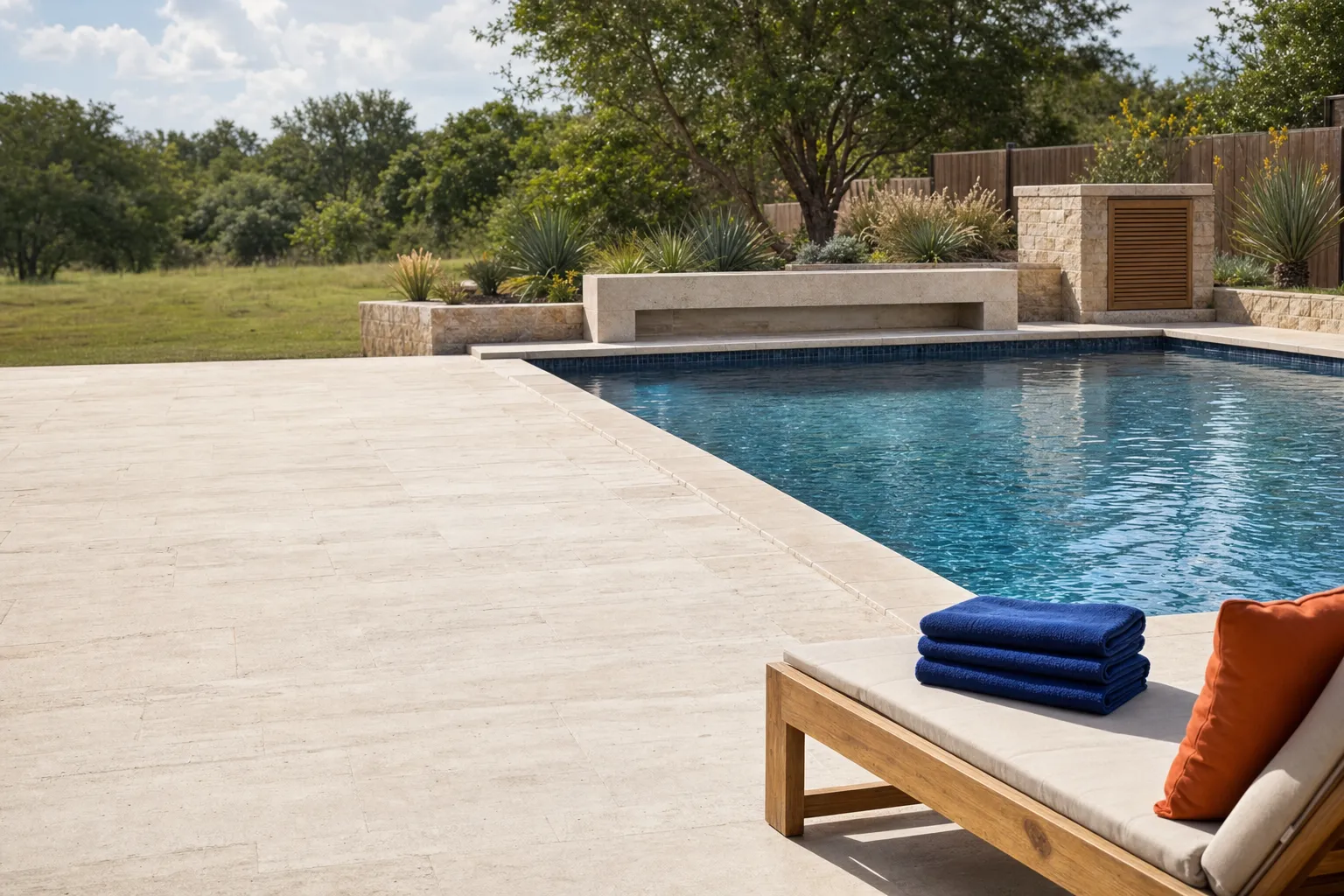
Pool resurfacing replaces the interior finish of a pool to fix wear, leaks and appearance issues, and to restore the pool to safe, usable condition. For Holowell, Texas homeowners we explain the common finish options, how the work is planned, the typical sequencing and what decisions affect cost and longevity.
What pool resurfacing actually means
When we say pool resurfacing we mean replacing the pool interior finish layer, not rebuilding the shell. That can include removing old plaster, preparing the concrete, repairing small surface defects, and installing a new finish material such as plaster, pebble, quartz or tile. Resurfacing is a surface level renovation that often extends the useful life of an existing pool and refreshes its appearance.
We handle resurfacing as part of broader Outdoor Living Integration projects, so we always look at how the pool finish will coordinate with decking, coping and landscaping when we plan the work.
How to tell if your Holowell pool needs resurfacing
Common signs that a pool needs resurfacing include persistent staining, hairline plaster cracks, rough or sandy texture underfoot, frequent water chemistry instability that does not respond to normal treatment, and visible delamination or flaking of the finish. Interior leaks that track along the finish can also signal a failed surface layer rather than a structural shell problem.
- Fading or patchy color across the pool shell
- Sandy or gritty buildup after brushing
- Stains that do not respond to standard treatment
- Exposed aggregate or flaking plaster
- Recurring cloudy water or unusual chemistry swings
Common finish materials and what they mean for Holowell pools
Choice of finish affects appearance, texture, maintenance, and how long the new surface will last. We evaluate site conditions, how the pool is used, and the surrounding outdoor living elements before recommending a finish.
| Finish type | Look and feel | Maintenance and longevity |
|---|---|---|
| Plaster | Classic smooth matte finish, available in white or tinted mixes | Lower upfront cost, requires more frequent maintenance and may need replacement sooner than aggregate finishes |
| Pebble or exposed aggregate | Textured, natural stone appearance with durable finish | Higher durability, more resistant to chemicals and staining, generally longer service life |
| Quartz blend | Fine texture, consistent color, modern appearance | Good balance of durability and smoothness, routine maintenance similar to pebble |
| Tile | Decorative banding or full tile finishes, high end aesthetic | Exceptional longevity for tiled areas, grout and membrane details affect maintenance |
Pros
- Multiple aesthetic choices to match decking and landscaping
- We can tailor texture for safety and comfort
- New finishes improve water clarity and ease of maintenance
Cons
- Some finishes have higher upfront cost
- Poor surface preparation shortens life of any finish
- Local water chemistry affects finish performance
The resurfacing process, step by step
Below is the usual sequence we follow when resurfacing a residential pool in the Holowell area. This is a general outline. Site specific issues such as structural repairs, complex water features or tiled vertical faces can add steps.
- Inspection and planning. We inspect the shell, measure wear patterns, check equipment and identify any structural concerns. We review the property context so the new finish coordinates with your outdoor living plan.
- Drain and prepare. The pool is drained and old finish is scarified or removed. We repair hairline cracks, chip out delaminated areas and address minor substrate defects.
- Surface profile and repairs. We create the correct surface profile for the chosen finish and complete any necessary concrete patching or bonding primers.
- Finish installation. The new finish is installed per manufacturer guidelines. For plaster and quartz this is a trowel applied finish. For pebble finishes aggregate is embedded into a bonding layer or shotcreted mix. Tile installations are set with appropriate waterproofing and grout.
- Curing and refill. The finish is cured according to product instructions before refilling. Proper curing is critical for durability and to avoid premature wear.
- Start up and balancing. We bring the pool back to operating chemistry and check equipment flow. We hand off care recommendations for the first 30 to 90 days of operation.
We never recommend work that allows shell damage to go unnoticed. If the inspection uncovers structural issues we will explain options and next steps.
Timing, weather and Holowell considerations
Local climate and seasonal outdoor activity influence scheduling. Hot, dry weather speeds some curing steps while heavy rains create delays. We plan around summer use and neighborhood schedules when possible, and we advise on best refill windows and chemical startup for Holowell area water chemistry.
Timing checklist
- Plan for a seasonal window with low rain probability
- Allow manufacturer recommended curing time before heavy use
- Coordinate with any decking or landscaping work for seamless Outdoor Living Integration
Common questions about longevity and maintenance
How long a new finish lasts depends on material choice, chemistry management, usage frequency and surface preparation quality. Proper start up and regular maintenance extend life. For homeowners in Holowell and nearby Lewisville we focus on finishes that balance look and long term performance for the Dallas Fort Worth climate.
- Keep water chemistry stable to avoid etching and staining
- Brush finishes as recommended and maintain filtration schedules
- Address small stains quickly to prevent deep discoloration
Pro tip: When you plan a resurfacing, consider matching finish tones to existing decking and landscape materials for a cohesive outdoor living feel. We review options with photos and samples during planning.
When resurfacing becomes part of a larger remodel
Resurfacing often pairs with equipment upgrades, lighting changes, new coping or expanded decks. If you are considering a more extensive Outdoor Living Integration we coordinate the resurfacing timeline with other trades so finishes, electrical and hardscape tie together cleanly.
Learn more about how finish choices integrate with broader outdoor projects on our Outdoor Living Integration topic page.
Cost drivers and decision points
We do not list prices here because every pool has unique needs. The items that most affect cost are the chosen finish material, the square footage of the pool, the extent of surface repairs, tile or trim work, and any equipment or accessory changes needed to support the new finish.
Quality surface preparation and correct curing are non negotiable. Cutting corners there tends to create early failure and higher lifetime cost.
What we inspect for during the initial visit
During a site visit we inspect the shell condition, measure finish wear, check coping and deck connections, evaluate equipment capacity and note any visible plumbing or structural signs that need further evaluation. That visit helps us recommend appropriate finishes and a realistic timeline for work in Holowell.
For more on preparatory work and why it matters, see our topic on surface preparation.
Watch out: Avoid contractors who promise next day resurfacing or skip documented curing steps. Proper resurfacing takes time and follows manufacturer procedures to ensure durability.
How we work in Lewisville and the Dallas Fort Worth area
Petri Pools is based in Lewisville, Texas, and we serve properties throughout the Dallas Fort Worth area. We bring more than two decades of experience to every resurfacing project, and we treat each job as if it were in our own backyard.
Key takeaway
Pool resurfacing replaces only the interior finish and is a cost effective way to restore appearance and extend service life, but success depends on finish selection, thorough surface preparation and correct curing. For Holowell homeowners, plan the work as part of your overall outdoor living design to get results that last and look integrated with your yard.
Frequently asked questions
How long does pool resurfacing take from inspection to usable water?
Timeline varies with finish choice and repairs needed. Typical projects require surface preparation, finish installation and manufacturer defined curing before refill. We assess your pool and provide a realistic schedule during the planning visit.
Which finish lasts the longest in our climate?
Aggregate finishes such as pebble or pebble quartz blends tend to be more durable in areas with heavy use and variable chemistry. Proper maintenance and balanced water are essential for any finish.
Will resurfacing stop leaking at the pool wall?
Resurfacing can seal many finish level leaks, but if a leak is structural or involves plumbing penetrations we will identify that during inspection and recommend appropriate repairs before or as part of resurfacing.
Do we need permits for pool resurfacing in Holowell?
Permitting requirements vary by city and by scope of work. Simple finish replacement often does not require new permits, but structural repairs, plumbing changes or major remodel items may. We can identify potential permit triggers during the initial inspection.
Next steps
Read customer reviews and get directions on our Google Business Profile to learn how we work on local pools. For more technical reading, see our service page on pool resurfacing and our topics on surface preparation.