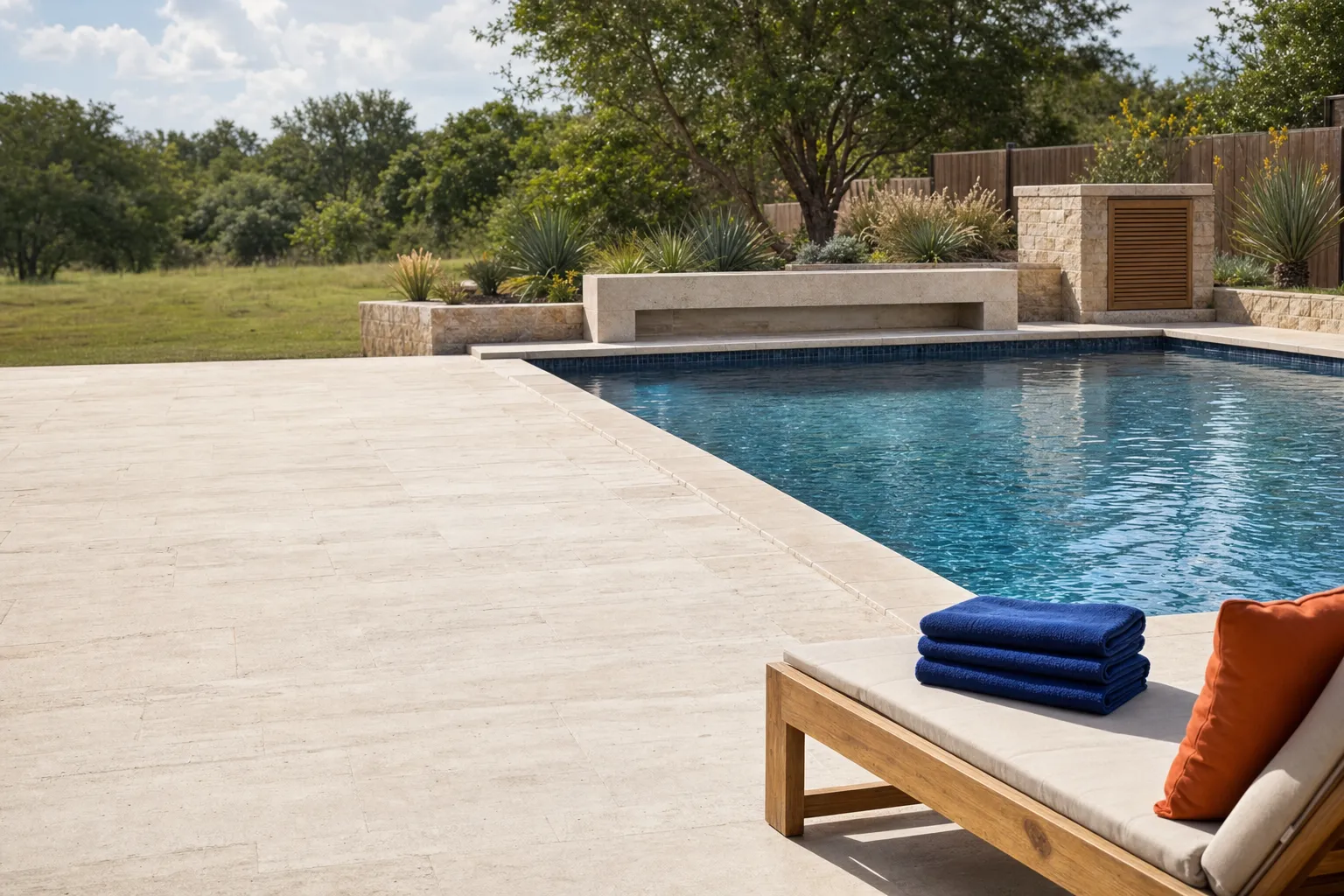
We evaluate pool coping options by looking first at durability, safety, slip resistance, how the material meets your design goals, and how it ties to the pool finish and deck. That first sentence is the short answer most homeowners need, and the rest of this guide explains how we reach recommendations for Timber Creek Texas pools and when a professional installation makes the difference.
What pool coping is and how it matters
Pool coping is the material that caps the pool shell at the waterline and frames the edge where the pool meets the deck. Coping affects how the pool looks and how it feels to use. It also performs structural and safety roles. The right coping keeps water from undermining the pool edge, helps swimmers enter and exit safely, and completes the visual transition between plaster or tile and the surrounding patio.
Why coping choices matter locally in Timber Creek
Timber Creek and the greater Dallas Fort Worth area see wide seasonal changes and intense summer sun. Materials that tolerate freeze and thaw cycles, resist staining from irrigation and landscaping, and stay comfortable underfoot during hot afternoons will perform better here. We factor local climate, nearby landscaping, and common deck materials when we review choices for a pool in Timber Creek.
Petri Pools has served Lewisville and the DFW area since 2000. We are licensed and insured, we handle resurfacing and full remodels, and we use customer feedback from more than 200 online reviews to refine material choices and installation details.
Key concepts to know when comparing coping options
- Durability. How well the material resists cracking, spalling, and UV damage.
- Slip resistance and comfort. Texture and edge profile affect safety and how hot the surface becomes in sun.
- Water management. The coping profile and joint details keep deck runoff from working under the pool shell.
- Compatibility with pool finish. Some coping materials work visually and technically better with plaster or tile finishes.
- Maintenance needs. Sealing, cleaning, and repair frequency vary by material.
- Edge profile and code. Rounded edges influence comfort and can affect barrier and handrail installation details required by local code.
How we review coping materials step by step
- Site and condition review. We inspect the pool shell edge, the existing deck, drainage, and any cracking or settling. If you are planning pool resurfacing we coordinate coping decisions with the resurfacing plan because details must align.
- Material matching and aesthetic review. We compare samples at your site so you can see the material in real light and next to your pool finish and landscaping.
- Performance assessment. For each option we evaluate slip resistance, thermal comfort in summer sun, and long term maintenance needs.
- Structural compatibility check. We confirm that the selected coping can be installed without undermining the shell or causing water intrusion, and we check expansion joint needs.
- Installation plan and sequencing. We plan how coping installation fits into the overall project schedule, especially when we are resurfacing, replacing tile, or changing the deck surface.
Comparison of common coping materials
| Material | Look and feel | Durability and maintenance | Best when you want |
|---|---|---|---|
| Natural stone, for example travertine | Warm, high end texture, cool underfoot | Long life with periodic sealing and cleaning | Luxury look that stays comfortable in summer |
| Cast concrete bullnose | Smooth rounded edge, many color and texture options | Durable, can crack if not properly supported; occasional resealing | A coordinated look that matches concrete decks |
| Precast concrete paver coping | Uniform shapes, paver style transition to deck | Low maintenance, easy to replace individual units | Easy repairs and a clean modular appearance |
| Pool tile edge and trim | Clean, crisp lines and many color choices | Tile can chip or pop if substrate moves; grout needs upkeep | Precise, modern finishes and matching wall tile |
Checklist for choosing coping for your pool
Selection checklist
- Review the pool finish to confirm color and texture compatibility
- Evaluate how the coping handles sun exposure and foot traffic
- Confirm the coping profile meets local barrier and handrail needs
- Ask about sealing and maintenance programs and expected intervals
- Check how the material will be joined to the deck and shell to prevent water intrusion
Common questions we hear from homeowners
Below are questions Timber Creek homeowners frequently ask when they are considering new coping or a resurfacing project.
Pro tip: View material samples at the pool so you can judge color in direct sunlight and see how a surface feels under barefoot conditions in mid afternoon.
- Will coping replacement change the pool resurfacing plan? Yes. Coping and finish meet at the waterline, so we plan both together when possible. For related details see our page on Pool Resurfacing.
- How long should coping last? Lifespan varies by material and installation quality. Properly installed stone or cast concrete coping can last many years if joints and drainage are handled correctly.
- Can we match new coping to an older deck? Sometimes. We will look at transition details and recommend grout, joint, or filler materials that create a cohesive look.
- Do local codes affect coping profile? Barrier and handrail requirements are set by local authorities and can influence edge detail. We review local requirements as part of the project plan. For general background on pool contractor roles see the industry overview on Wikipedia.
Related services and how they connect
Coping choices often come up alongside other pool upgrades. We coordinate these services so the finished project is durable and well integrated.
- Pool Resurfacing, because the coping edge and pool finish must meet cleanly.
- Pool Plastering, when a new interior finish influences the profile and tile choices.
- Pool Remodeling, for larger scope changes that may include new coping, decking, water features and lighting.
How local locations affect material choices
We treat each neighborhood as distinct. Timber Creek pools can sit near mature oak trees, landscaped yards, or modern patios. That affects debris loading, stain risk, and preferred edge detail. If you are in Timber Creek we review those site factors on our visit so we can recommend materials that perform here. For a local project reference see our Timber Creek page at Timber Creek Texas.
Helpful resources and standards
For maintenance guidance on natural stone and other masonry materials, industry resources such as the Natural Stone Institute provide care recommendations. To understand how pool contractors are regulated and what local authorities require for public pools you can review information from the Texas Department of Licensing and Regulation. These resources help explain long term care and contractor responsibilities.
Manufacturer installation and care guides for specific coping products also matter. We bring product literature to each project so we can match installation detail to the manufacturer recommendations.
What good looks like after installation
A successful coping installation sits level to the pool shell, sheds water away from the joint, feels safe underfoot, and complements the finish. Joint lines are consistent and sealed where needed, and the transition to the deck is stable. When we handle projects we check those details during and after installation so the coping performs for years.
Key takeaway
Choose coping by balancing durability, safety, maintenance, and how the material complements your pool finish and deck. Local conditions in Timber Creek change priorities, and coordinating coping with resurfacing or remodeling avoids surprises.
Frequently asked questions
What coping material stays coolest in Texas sun?
Light colored natural stone and certain textured concrete finishes tend to remain cooler than dark tile under direct sun. Texture and color both influence thermal comfort as well as slip resistance.
Can new coping fix an undermined pool edge?
Replacement coping can address edge problems but only after we identify and repair any shell or structural issues. We inspect for undermining and plan repairs before installing new coping.
How long does coping installation take?
Timing depends on material and scope. Simple replacement of modular pieces can be shorter, while full cast concrete or stone installations that require substrate adjustments take longer. We schedule coping work to fit the overall resurfacing or remodeling timeline.
Do we need to seal stone coping?
Many natural stones benefit from periodic sealing to limit staining and reduce tire track and irrigation marks. The manufacturer or stone supplier will have specific recommendations.
Learn more and see local examples
Read our topic page on pool coping for deeper details and photo examples at Pool Coping Options. For projects in the Timber Creek area we coordinate coping choices with resurfacing and remodel plans so the finished pool is durable and attractive. Check Petri Pools on Google to read customer reviews and get directions to our Lewisville office.