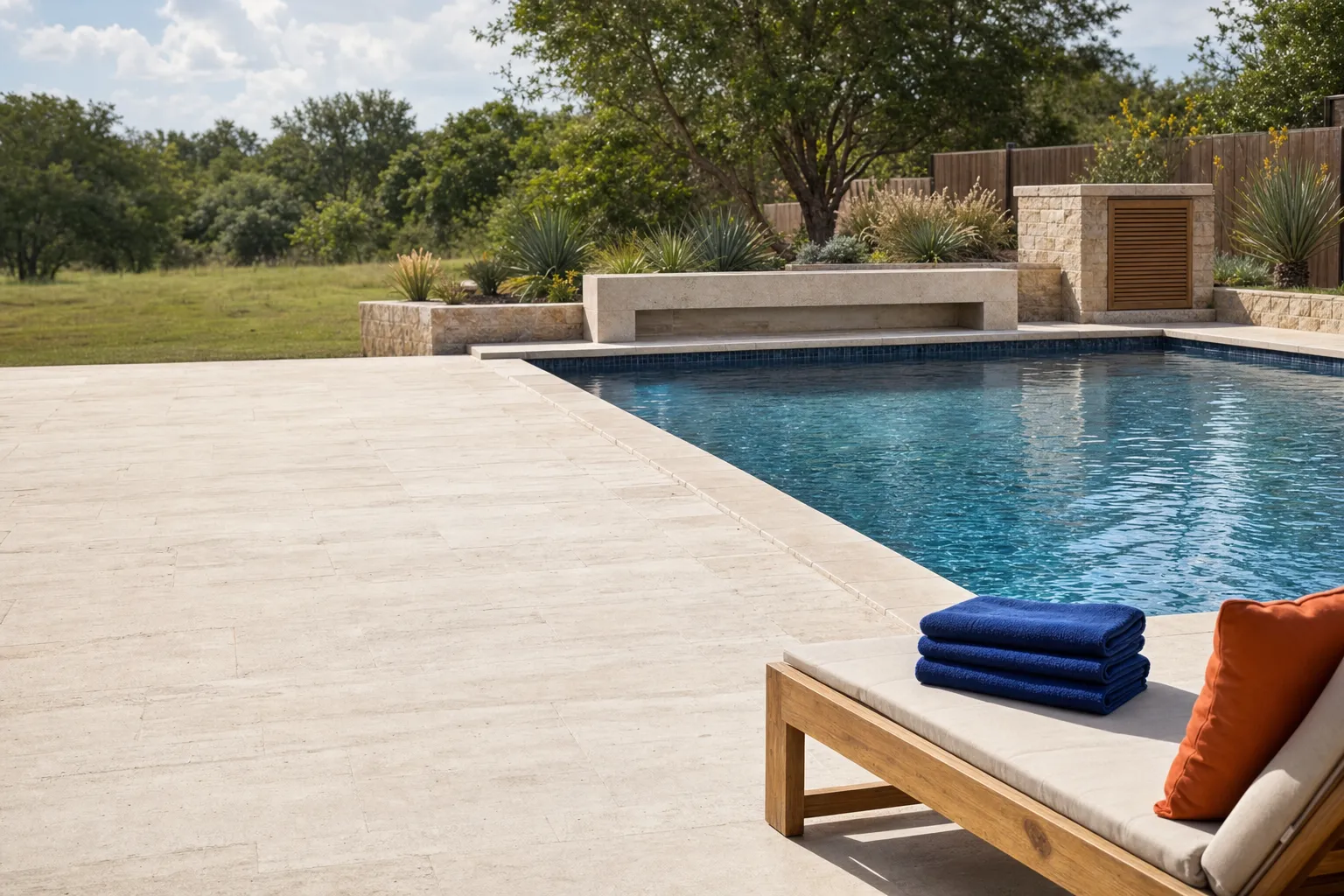
Surface preparation is the part of pool resurfacing that makes the new finish bond and last. When surface preparation is involved, we first assess the existing shell, remove all loose or unsound material, profile and clean the concrete, repair cracks and delamination, and only then apply the new plaster or finish so it cures correctly.
What surface preparation means for pool resurfacing
Surface preparation is everything we do to the pool shell before applying a new finish. That includes inspection, targeted demolition of failed material, mechanical profiling, chemical cleaning when appropriate, repairing structural or substrate problems, and preparing a clean, dry surface the new finish can bond to.
We treat surface preparation as a sequence. Skipping one step increases the risk of peeling, premature wear or staining. For homeowners in Vista Ridge and the wider Dallas Fort Worth area, good preparation translates into fewer callbacks, better appearance, and a finish that meets the expected service life for the chosen material.
Why surface preparation matters locally in Vista Ridge
Concrete in the Dallas Fort Worth area faces specific conditions. Seasonal temperature swings, hard water minerals, and sun exposure change how plaster and aggregate finishes behave over time. Proper preparation accounts for those local factors so the finish performs in our climate.
At Petri Pools in Lewisville, we combine local experience with a methodical prep routine so resurfacing is predictable. That experience matters whether the project is a simple replaster or a full concrete pool resurfacing job.
Key concepts you should know
- Bond surface. The finish must adhere to a stable, clean substrate. Any loose material must be removed.
- Mechanical profiling. Grinding, shot blasting, or acid etching change the surface texture so new material keys in.
- Repair scope. Small cracks, spalls, or deeper delamination require different repairs before finishing.
- Compatibility. Not every preparation method suits every finish. We match prep to the planned finish, such as plaster, pebble, or specialty coatings.
- Curing and hydration. After resurfacing, finishes need controlled hydration and curing. Poor prep can spoil those steps.
What we inspect first
Before we remove a drop of finish, we do a documented inspection. Our checklist covers visual signs and simple tests so we can recommend the right preparation method.
Preliminary inspection checklist
- Finish adhesion and loose areas.
- Cracks, hairline and structural.
- Staining or chemical etching of the substrate.
- Surface contamination from oils, paints or adhesives.
- Equipment penetrations and returns that may need replacement or sealing.
Common surface preparation methods and when we use them
There is no single correct method. We choose based on the finish type, the condition of the pool shell, and long term performance goals.
| Method | When we use it |
|---|---|
| Shot blasting | When the existing finish is well bonded but needs a clean mechanical profile for plaster or quartz finishes. |
| Grinding | Targeted removal of high spots, thin delaminated layers, or to dress repaired areas for a uniform profile. |
| Acid wash or etching | Light cleaning to remove mineral staining on sound concrete. Not a substitute for mechanical profiling on bonded finishes. |
Repairs that must happen before resurfacing
Some issues demand repair before any new finish goes down. We document repairs and explain tradeoffs so you can make informed choices.
- Structural cracks. These often need epoxy injection or routed and sealed repairs depending on movement and width.
- Delamination. Areas where the substrate has lost cohesion must be removed and patched.
- Corroded steel or rebar concerns. If we find exposed steel during profiling, it requires appropriate remediation.
- Failing tile or coping junctions. These must be addressed so water intrusion does not undermine the new finish.
How surface preparation changes the project timeline
Surface preparation adds time, but that time protects your investment. A typical sequence on a residential plaster job looks like this.
- Inspection and plan. We document conditions and decide the prep method.
- Drain and protect surrounding areas. Pool water is removed and decking or landscaping is protected.
- Remove loose finish and profile surface. Shot blasting or grinding happens next.
- Make repairs. Patching, crack repair and any structural work.
- Final cleaning and solvent wipe. Surface must be free of dust, oil and loose particles.
- Apply new finish and cure. Plaster or other finish goes on, then we follow material specific hydration steps.
For many projects in the area, the prep and repair phase can take two to five days depending on the extent of repairs. The finish and cure add another week or more before the pool is returned to normal use, depending on the material and weather.
Quality markers we look for during prep
We evaluate the following to know the prep is complete and correct.
- Uniform surface profile without feathered edges.
- No remaining loose material when tested with a scraper.
- Clean substrate free of oils, paints or organic contamination.
- Repairs that match the substrate strength and do not create high or hollow patches.
- Sealed equipment penetrations and returns ready for finish integration.
Pro tip: Ask for a written prep plan that lists methods, repairs, and how the profile will be verified. That keeps expectations aligned and protects the new finish.
Common homeowner questions about surface preparation
We answer the typical concerns so you know what to expect.
- Will preparation damage tile or coping? Not if it is done carefully. We protect fixed finishes and only profile the pool shell where the finish is being replaced.
- Can we keep the same finish color or texture? Yes, but only if the substrate is appropriate and the old finish was removed or profiled to accept the new material.
- What happens if we skip profiling? Skipping profiling risks poor bond, which shows up as peeling, flaking, or accelerated wear within months to years.
How surface preparation affects your selection of finish
Different finishes need different prep. For example, traditional white plaster has different substrate and curing needs than a pebble or quartz finish. We match the preparation method to the finish so the warranty period and expected life align with your expectations.
If you are considering plastering as the finish, read more about our plaster work on our Pool Plastering page. For heavy concrete overlays, see our Concrete Pool Resurfacing service page.
Related services that tie into surface preparation
Surface preparation often overlaps with other services. We coordinate trades so the project runs smoothly.
- Pool Resurfacing. Surface preparation is the first major phase of resurfacing. Learn how we manage resurfacing projects on our Pool Resurfacing page.
- Equipment updates. We inspect skimmers, returns and lights and note when replacement should precede the finish work.
- Remodeling and water features. If you plan design changes, we integrate prep into the larger renovation timeline to avoid rework.
Where we do this work locally
Petri Pools works throughout the Dallas Fort Worth area and performs surface preparation and resurfacing projects in Vista Ridge. If you want to understand how this applies to a specific neighborhood, see our Vista Ridge location page for local examples and notes on materials that perform well in this microclimate.
Vista Ridge, Texas is representative of the soils and water chemistry we plan for in Lewisville and nearby communities.
Helpful resources and further reading
We keep a short list of topics that help homeowners decide on materials and schedule. For details about how long a project typically takes see our planning notes on Project Timelines. For a broader discussion of surface preparation methods see our topic page on Surface Preparation. If you are choosing finish materials, visit our guide to Pool Finish Materials.
Petri Pools is a licensed and insured swimming pool contractor based in Lewisville. We have been serving homeowners and local properties since 2000 with a focus on craftsmanship and long term performance.
Key takeaway
Surface preparation is not optional. It is the deciding factor for how well a resurfaced pool looks and lasts. Proper inspection, mechanical profiling, and repairs create the foundation for a durable finish in Vista Ridge and across the DFW area.
Frequently asked questions
How long does surface preparation add to a resurfacing job?
The prep phase can add two to five days on a typical residential job, depending on repairs. After prep, finish application and curing add additional days. Final timelines vary by finish and weather conditions.
Will surface preparation create a lot of dust and debris?
Profiling methods such as shot blasting and grinding create dust. We protect decking and landscaping, use dust containment where practical, and perform thorough cleanup before applying a finish.
Can we resurface a pool without draining it?
Most resurfacing and profiling work requires the pool to be drained. Some minor repairs can be done while water is in place, but a full finish replacement needs dry access to the shell.
How do you verify that the surface is ready for a new finish?
We use visual inspections, adhesion tests, and profile gauges for mechanical methods. We document the results and include them in the project notes so the finish crew can proceed with confidence.
Learn more and read local reviews
For details about how surface preparation fits into your project, see our pages on Surface Preparation and Pool Resurfacing. You can also view our local presence and customer reviews on the business profile for Petri Pools, and find directions to our service area in Vista Ridge.